In the previous post you saw how Julia Moore used a sourdough levain to begin fermenting cider. In this article the process comes full circle: the sediment and barm from that racked cider are put to work fermenting bread.
There is a long tradition of using the foam or leftover yeast from brewing to make barm bread. This practice—sometimes called “barm bread”—makes use of the living yeast captured during fermentation to leaven dough and add distinctive flavors.
When Julia told me she planned to bake with her cider leftovers, I expected a good result. She’s adventurous with fermentation, and this bake shows why.
Cider barm sourdough bread recipe
Ingredients
Reserve about 175ml of the liquid in each litre bottle, then shake the bottle to re-suspend the sediment and barm that collects at the neck. Use 350ml of this cider barm as the starter for the bread.
To the 350ml cider barm add:
- 560g white organic bread flour
- 2 teaspoons salt
- 2 tablespoons honey
Method
Combine the cider barm, flour, salt and honey and mix, then knead the dough as you normally would.
At first the dough may feel sluggish. After working it a few times over a three-hour period Julia found it did not relax or show the usual sourdough elasticity. She shaped the dough into a boule, rolled it in a mix of rye and rice flour to prevent sticking, and rested it in a cloth-lined bowl at room temperature.
When an hour passed with little visible activity, Julia took the unconventional step of placing the dough in her airing cupboard to encourage warmth. This is not a typical sourdough approach, but cider barm responds better to warmer conditions than many sourdough cultures.
Twelve hours later the dough was relaxed and ready to bake—proof that patience and a slightly warmer proving environment worked well for this ferment.
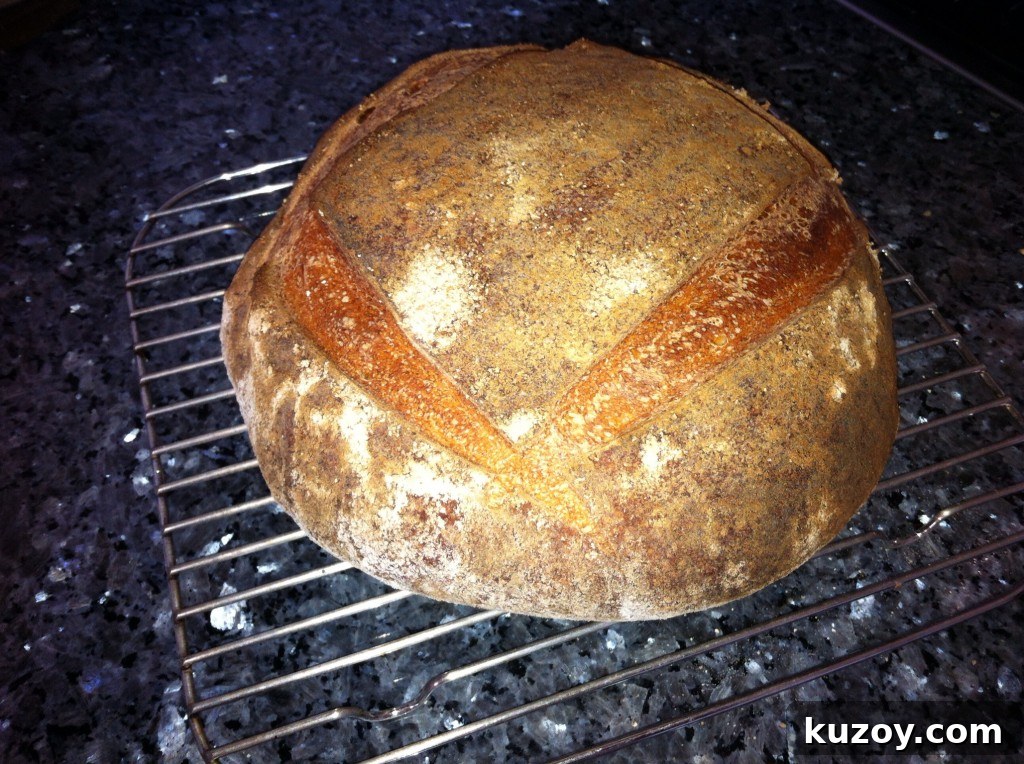
Preheat the oven to 225°C. Sprinkle the base of the dough with wholewheat semolina, then carefully invert it onto a baking sheet. Score the top in any pattern you prefer, then bake for 40 minutes, reducing the temperature to 200°C halfway through the bake.
Result
The finished loaf has a soft, textured interior with a dark, chewy crust. The crumb shows an open, appetizing structure and the flavor carries a pleasant apple note from the cider, with a subtle biscuity character reminiscent of digestive biscuits.
This bread pairs beautifully with cheese—Julia and I particularly enjoyed it with Barkham Blue from Two Hoots.
Overall the cider barm loaf is a success. The cider itself will need more time to mature, but the bread demonstrates a creative and delicious use of fermentation byproducts.
Notes: Julia used white organic flour for this bake, but any organic bread flour should work. As an alternative approach, you might build a sponge or poolish from the barm, honey and about 200g of flour and let that ferment overnight before adding the remaining flour and salt—this can help develop flavor and activity.
Have you tried baking with barm from cider, beer or wine? Share your experiences—Julia and I would love to hear your results.