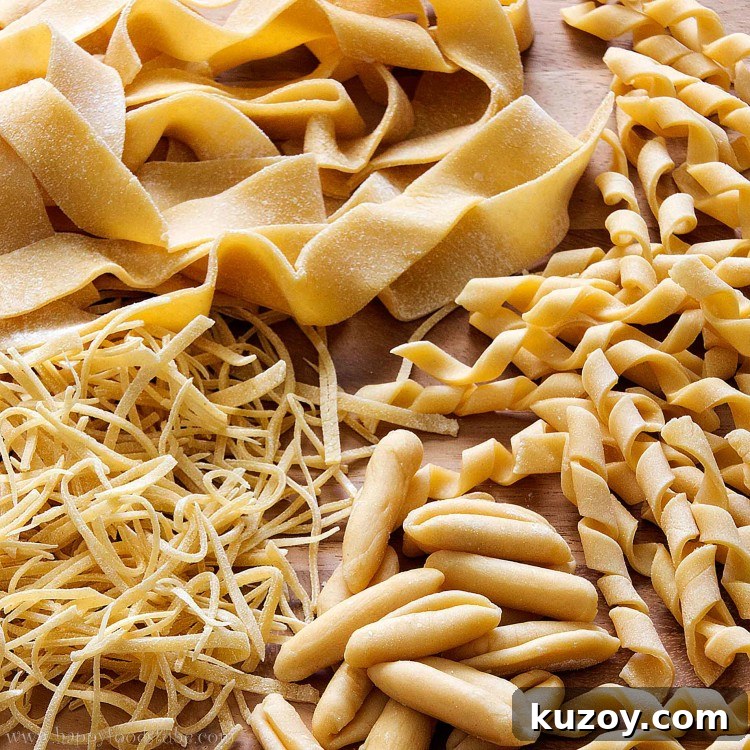
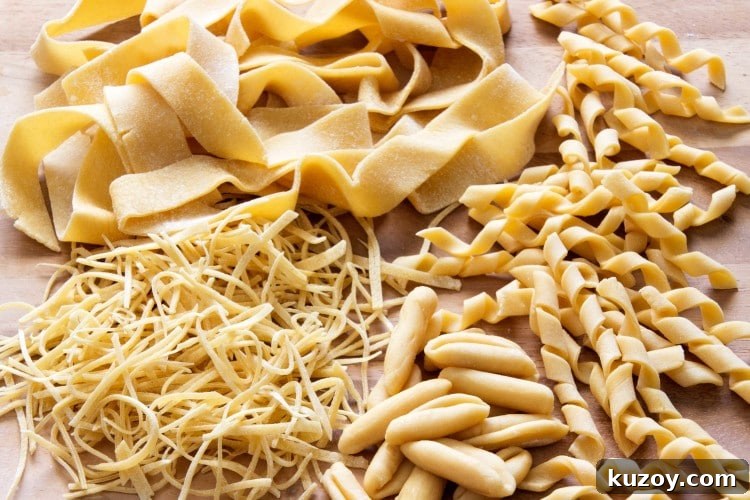
These are some pasta shapes that you can easily make at home without any special tools. Tagliatelle, farfalle, pappardelle, angel hair pasta, fusilli and many more can be formed using simple kitchen items like a rolling pin, knife, fork and your hands. Making shapes at home is rewarding: fresh pasta cooks faster, absorbs sauces better and offers a texture you won’t get from dried commercial varieties.
Watch the video for this tutorial:
A step-by-step video tutorial demonstrates the basic techniques for rolling, cutting and shaping several common pastas. If you prefer visual guidance, search for a reputable cooking channel or the original source that covers home pasta shaping to follow along with the motions and timing.
Check out our simple Pasta Dough Recipe!
Basic pasta dough and preparation
Start with a reliable pasta dough: typically strong flour (like 00 or all-purpose) and eggs, or a combination of flour and water for egg-free versions. Knead until the dough is smooth and elastic, then rest it wrapped at room temperature or refrigerated briefly. Resting relaxes the gluten and makes rolling easier. Divide the dough into smaller portions to work with manageable pieces and keep unused portions covered to prevent drying.
Rolling and cutting techniques
Roll each portion thinly with a rolling pin or a pasta machine if you have one. For tagliatelle and pappardelle, roll to an even thickness, dust lightly with flour, fold the sheet loosely and cut to the desired width with a sharp knife. For angel hair, roll considerably thinner and cut into very fine strands. Use a ruler or the edge of a board to keep cuts straight, and separate strands gently to avoid sticking.
Making farfalle (bow ties)
Cut the dough into small rectangles about 3–4 cm by 5–6 cm. Pinch the center of each rectangle between thumb and forefinger to form the classic bow-tie shape. Press firmly enough to hold the shape but not so hard that the dough tears. Slightly ruffling the ends before pinching gives a decorative effect and helps sauce cling to the pasta.
Forming fusilli and simple twists
To make fusilli without a special tool, cut thin strips of dough, wrap each strip around a skewer or thin dowel, and roll gently to create a spiral. Slide the pasta off and let it dry slightly to hold its shape. Another method is to twist narrow strips between your fingers for a rustic, corkscrew texture. These hand-shaped spirals trap sauces and add visual interest to the plate.
Shaping shells and cups
Smaller shell shapes can be stamped or cut from thin sheets using a rounded cutter or the rim of a glass. Pressing the center lightly with your thumb forms a cup that is excellent for holding thicker fillings or chunky sauces. For larger shells, stretch gently to achieve the size and curvature you want before allowing them to dry briefly.
Drying, cooking and storing
Fresh pasta cooks fast—usually 1 to 4 minutes depending on thickness. Bring a large pot of salted water to a rolling boil and cook in small batches to prevent sticking. If you plan to store fresh pasta, toss lightly with semolina or flour to keep pieces separate, then refrigerate for a day or two in an airtight container, or freeze on a tray and transfer to a sealed bag once firm. Drying shapes fully on racks or trays will preserve them longer; let them become crisp in a cool, dry place before storing.
Sauce pairings and finishing tips
Choose sauces that complement each shape: thin, oil-based sauces and light broths work well with delicate angel hair, while hearty ragùs and chunky vegetables pair with wide ribbons like pappardelle. Toss freshly cooked pasta briefly with sauce and a little reserved pasta water to help the sauce cling. Finish with a drizzle of good olive oil, fresh herbs, or a sprinkle of grated cheese to enhance flavor.
Final tips for better homemade pasta
Work on a lightly floured surface, keep dough portions covered to avoid drying, and practice simple shapes before attempting intricate designs. Small variations in thickness and technique are normal and part of the charm of handmade pasta. With a bit of practice you’ll develop a feel for dough elasticity and the right amount of pressure to shape beautiful, delicious pasta at home.