How to skin salmon at home? It’s straightforward. With the right knife and a simple technique you can remove skin quickly and cleanly—no advanced skills required. Whether your salmon will be steamed, roasted, pan-seared, air-fried, or flaked into a salad, this step-by-step guide explains the process with clear instructions and practical chef tips.
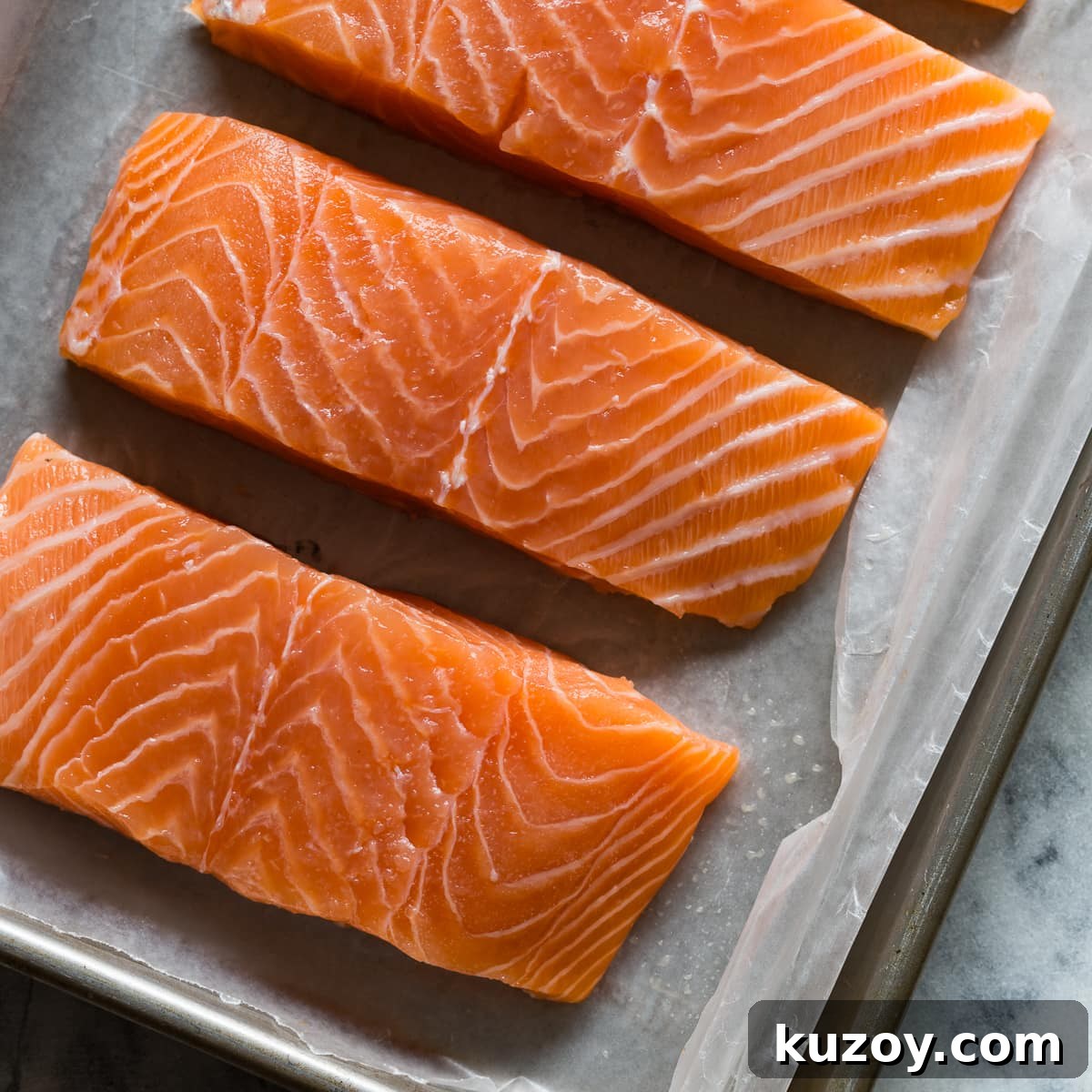
I’ve prepared salmon in many ways—steamed, air-fried, grilled, roasted, and pan-seared—and over time I’ve come to prefer working with skinned fillets for many dishes. Salmon is often sold with the skin on, so you can either ask the fishmonger to remove it or learn to do it yourself. It’s easier than it looks and can improve the flavor and presentation of several preparations.
If you haven’t learned to skin salmon yet, this guide will walk you through the technique so you can do it confidently at home.
Why Skin Salmon
Cooking salmon with the skin on is perfectly fine in many cases—crisped skin can be delicious—but I often remove it to eliminate the bloodline, the darker purple strip between skin and flesh. That area can have a stronger, more assertive “fishy” taste that puts some people off. Removing the skin lets you trim that bloodline away for a milder, cleaner-flavored fillet.
For methods like steaming, roasting, or preparing salmon for salads, removing the skin yields a more consistent texture and appearance. If you prefer to enjoy crispy skin, save it for specific recipes where that texture is desired.
Chef’s Tip: Talk to your fishmonger. Ask for center-cut fillets when possible—these are thicker and more even, which makes portioning and cooking easier. If the display looks tired, ask if there’s a fresher supply in the back. When choosing salmon, prioritize freshness and even color.
What You’ll Need
The essential tool for skinning salmon is a sharp, flexible fillet knife. A chef’s knife is usually too thick and stiff to slide smoothly between flesh and skin. A proper fillet knife lets you make precise, clean cuts without tearing the flesh.
If you cook fish often, a fillet knife is worth the investment. It doesn’t have to be expensive, but it should be sharp and flexible. Keep it honed and have it professionally sharpened when needed.
- A flexible fillet knife (recommended).
- An old fishing fillet knife or Japanese-style flexible blade can work well.
- Paper towels to grip slippery skin.
Chef’s Tip: A sharp, flexible blade makes the job quick and neat. If you don’t have a fillet knife, a very sharp, thin utility knife is an acceptable substitute—avoid thick chef’s knives for this task.
How to Skin Salmon (Step-by-Step)
Note: The photos here may be from earlier posts but they demonstrate the technique clearly.
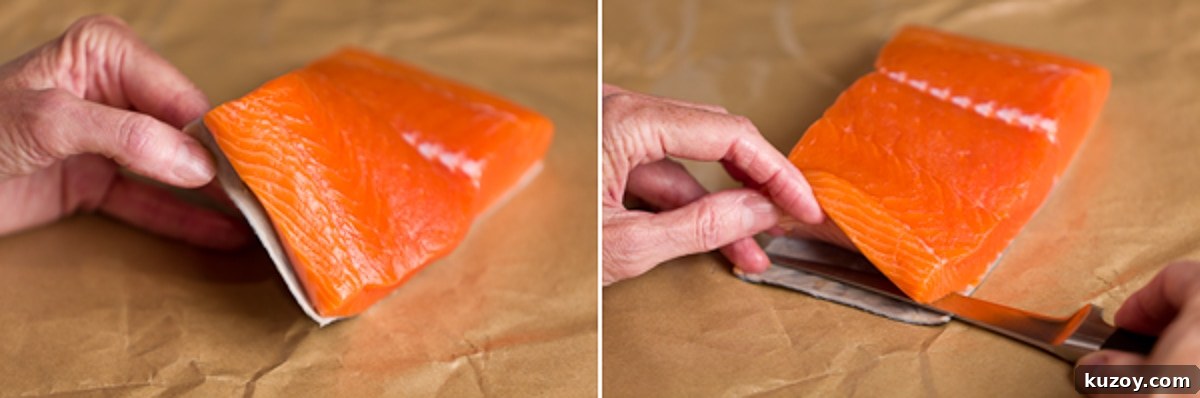
Step 1: Start at the tail end.
Place the fillet skin-side down on a cutting board. At the tail end, slip the knife between flesh and skin to create a small notch you can hold onto.
Step 2: Position your knife.
Hold the blade roughly parallel to the cutting board with a slight upward angle. Use your non-cutting hand to grip the skin; if it’s slippery, use a paper towel for better hold.
Step 3: Glide the knife forward.
With gentle, steady pressure, push the knife forward while pulling the skin taut. Let the flexible blade do the work and slice along the fillet in one smooth motion. If a spot sticks, flip the fillet and finish that section from the other side.
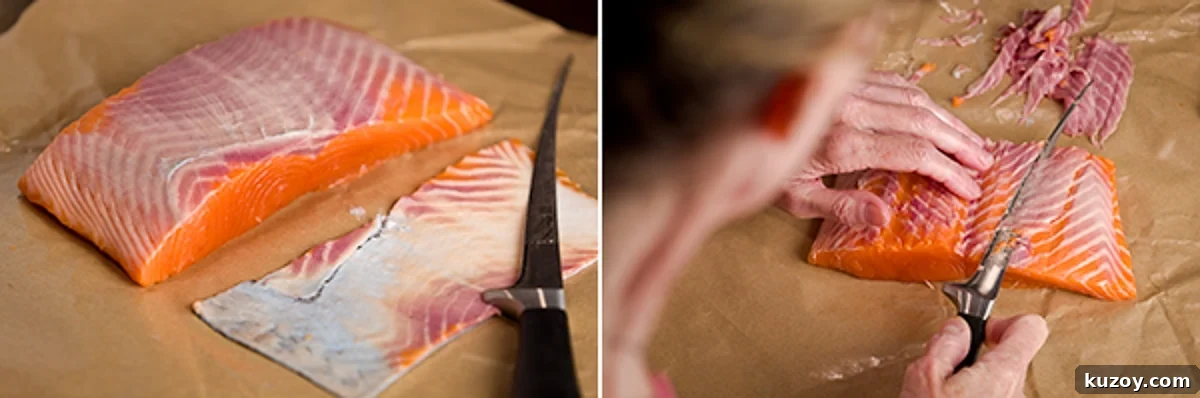
Step 4: Trim the bloodline (optional).
The bloodline is the darker purple-red strip on the skinned side. It varies in width and can have a stronger flavor. For a milder taste, slice along each side of the bloodline and lift it out. Whether you leave it or remove it is a matter of personal preference.
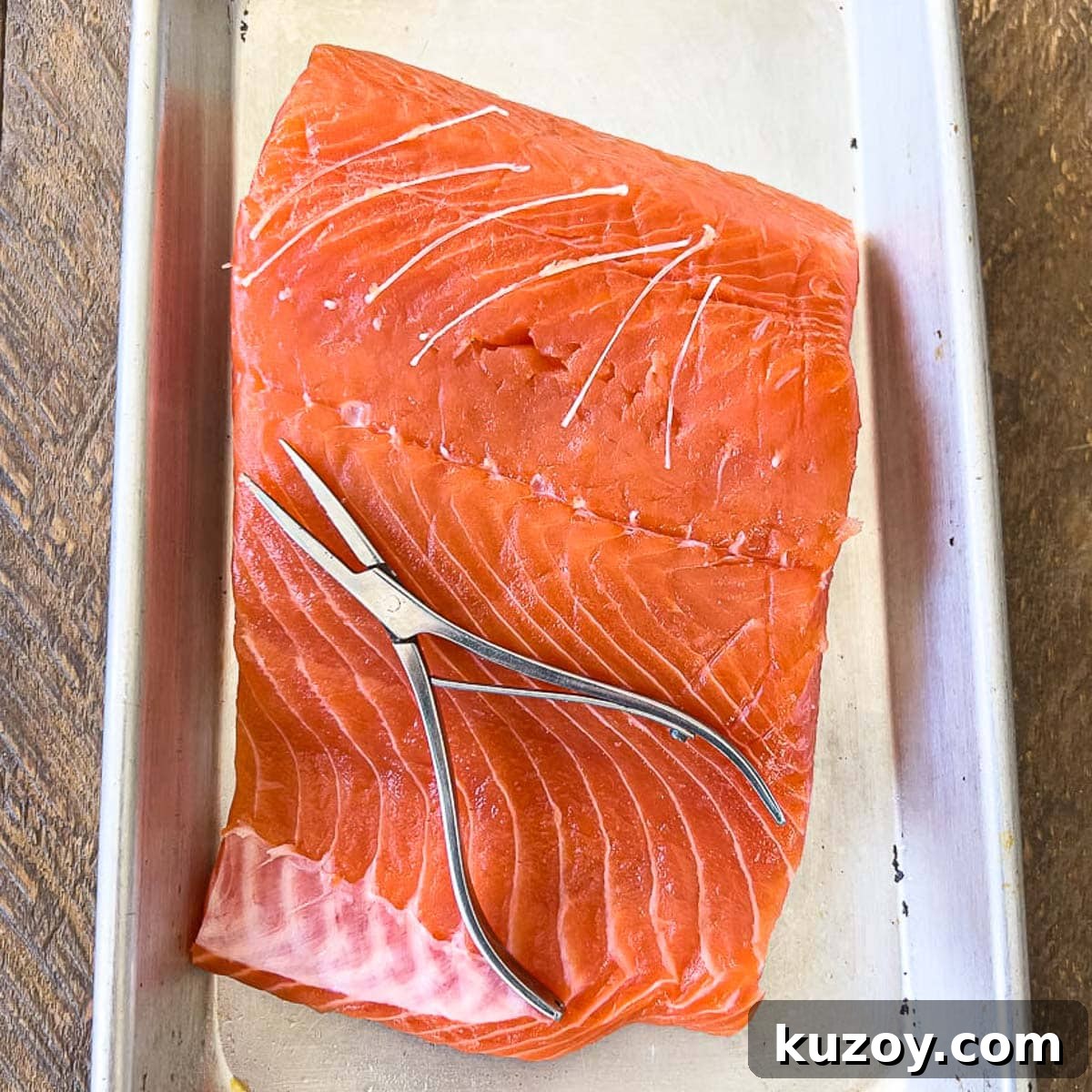
Step 5: Check for pin bones.
Run your fingers gently along the fillet to feel for any pin bones. Dampening your fingers makes them easier to detect. Remove any you find with tweezers or needle-nose pliers, pulling them out in the direction they naturally lie.
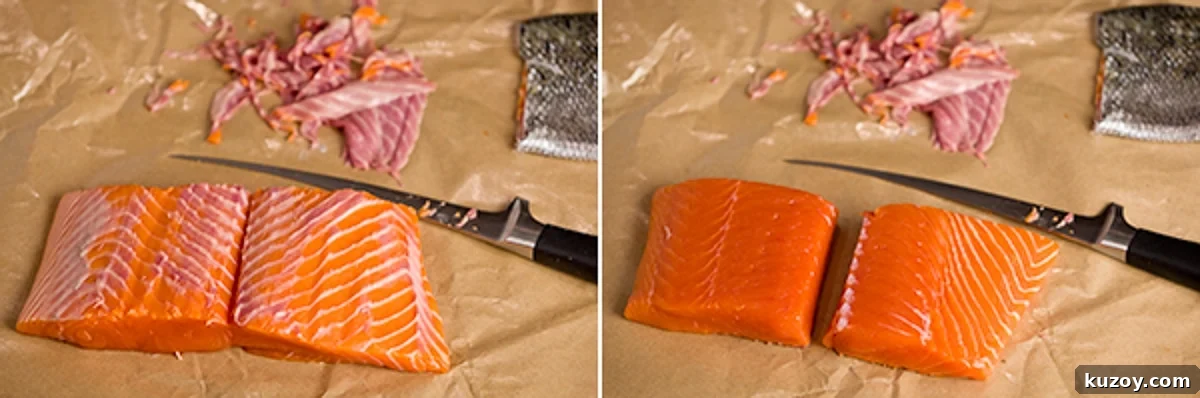
Step 6: Portion the salmon.
Cut the fillet into portions as needed. A standard serving is roughly 4–6 ounces depending on appetite and the dish.
Chef’s tip: It’s often easier to practice on individual fillets or smaller portions. A whole side of salmon can be handled, but individual fillets are simpler until you’re comfortable with the technique.
How to Skin Salmon FAQs
No. It depends on the cooking method and your preference. Grilling or pan-searing with the skin on can protect the flesh and create a crisp exterior. For steaming, roasting, or flaking into salads, removing the skin gives a cleaner result and lets you trim the bloodline if you prefer.
Yes—especially for steamed or poached fish, the skin often peels off easily after cooking. However, trimming the bloodline and getting precise portions is generally easier when the fish is raw, which is why many people remove the skin first.
A very sharp, thin utility knife can work in a pinch. Avoid thick, heavy blades like chef’s knives, which can tear the flesh. If you cook salmon regularly, consider getting a fillet knife for better results.
Yes, it’s safe to eat. The bloodline simply has a stronger flavor. Some people enjoy it; others prefer to remove it for a milder taste.
You can, and when crisped it can be quite tasty and adds healthy fats. However, when steamed or poached the skin can become rubbery, so many cooks remove it for those preparations. Whether to eat it comes down to texture preference and the cooking method.
Salmon Recipes to Try
-
How to Make Steamed Salmon
-
Simple Stovetop Salmon
-
Sesame Crusted Salmon
-
Baked Pistachio Crusted Salmon