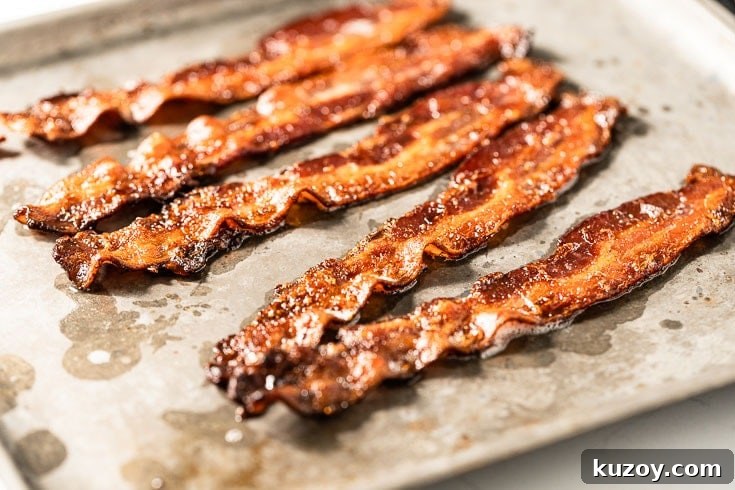
Crispy, crunchy, chewy, salty, smoky with a hint of sweetness — bacon hits all the right notes no matter the hour. Most people who eat pork love perfectly cooked bacon, and even some non-regular bacon eaters indulge on special occasions.
Preferences vary: some prefer soft and chewy bacon, others like it charred, and many (including me) prefer bacon that’s perfectly crisp while remaining slightly tender in the center. That texture is easy to achieve when you cook bacon in the oven.
There’s a reason many cooks agree: the best way to cook bacon is in the oven. Once you try it, you’ll see how forgiving and consistent baking bacon can be. Oven-baked bacon also lets you dial in the precise crispness you want.
Below is a clear, step-by-step guide to making perfect bacon every time, plus tips on technique, equipment, and how to use leftover bacon fat.
How to Cook Bacon in the Oven
Baking bacon is simple and largely hands-off. Follow these steps for reliably great results:
- Arrange bacon strips on a foil-lined rimmed baking sheet, leaving space between each strip. Drizzle about 1 tablespoon of water per 1/2 pound of bacon over the strips.
- Place the sheet pan in a cold oven, then set the oven to 400°F (204°C).
- Bake for about 20 minutes, then carefully flip the bacon with tongs and rotate the sheet pan.
- Continue baking 5–10 minutes more, or until the bacon reaches your preferred level of crispness.
Ovens vary, so exact timing depends on your appliance and how crisp you like your bacon.
Methods for Cooking Bacon
You can cook bacon in a skillet, the oven, the microwave, or on the grill. Each method has pros and cons.
Comparing Methods for Cooking Bacon (Pros and Cons)
| Method | Pros | Cons |
| Oven | Great for large batches; works in countertop or full-size ovens. Grease is easier to save and cleanup is simple. | Large ovens take time to heat up. |
| Pan | Quick for small quantities. | Limited capacity, grease splatter, and higher risk of burning; skillet cleanup can be messy. |
| Microwave | Very fast (4–5 minutes). | Limited to plate size, cooks unevenly, and often lacks crispness. |
| Grill | Keeps smell and mess outdoors. | Grease can drip onto coals or burners and cause flare-ups. |
There’s no single perfect method for everyone, but for consistent, hands-off results and easy cleanup, the oven is my go-to.
The Benefits of Cooking Bacon in the Oven
- Cook large batches at once.
- Minimal cleanup and no splattering.
- Even cooking and excellent crispness.
- Hands-off method so you can prepare other breakfast items simultaneously.
Options When Baking Bacon
Aluminum foil vs. parchment paper
Aluminum foil protects the pan sides and makes cleanup fast — simply discard the foil after the grease cools. Parchment paper can brown the bottom more quickly because the bacon sits closer to the sheet pan, but it doesn’t contain grease as well. For cleanup and convenience, aluminum foil wins.
Directly on foil vs. on a cooling rack
Cooking directly on foil means bacon cooks in its own rendered fat and stays flatter; you may need to flip it. Cooking on a cooling rack lets hot air circulate all around the strips for even cooking and slightly curled edges, and flipping is usually unnecessary. The tradeoff is cleanup: racks can be harder to wash, so many prefer foil for convenience.
Top 9 Tips for Cooking Bacon in the Oven
Follow these tips for the best results:
- Start with good-quality bacon. A small upgrade in quality makes a noticeable difference.
- Choose thick-cut bacon. It cooks more evenly and offers a satisfying bite.
- Begin with cold bacon in a cold oven. This helps render the fat gradually so it crisps without burning. If your oven is already hot, it will still work — just watch closely.
- Line the baking sheet with foil. Foil makes cleanup easy. Once the fat cools, pour it into a container to save or discard the foil.
- Don’t overcrowd the pan. Give each strip space so it crisps evenly.
- Add a small amount of water. About 1 tablespoon per 1/2 pound helps keep the meat portion tender while the fat crisps.
- Flip the bacon once. Flip just before it becomes fully crisp. If using a cooling rack, flipping is often unnecessary.
- Rotate the sheet pan after flipping to ensure even cooking.
- Save the bacon fat for cooking potatoes, eggs, dressings, or other dishes — store it refrigerated or frozen.
What Kind of Bacon to Buy
With many options available, a simple rule of thumb is to choose thick-sliced, applewood-smoked bacon if you like a smoky flavor. Packaging and presentation vary, but high-quality bacon can come wrapped in butcher paper or sealed in plastic — the important part is the quality of the meat and fat.
Temperature for Baking Bacon in the Oven
400°F (204°C) is an ideal temperature for oven-baked bacon.
How Long to Cook Bacon in the Oven
Thick-sliced bacon on a foil-lined sheet typically takes 15–25 minutes at 400°F. Factors affecting time include preheat status, bacon thickness, oven specifics, and desired crispness. Using the convection setting shortens and evens the cook time by circulating hot air.
6 Things To Do with Leftover Bacon Grease
Saved bacon grease is a versatile cooking fat. Stored in a sealed container in the refrigerator it lasts months, and even longer in the freezer. With a smoke point around 325°F, it’s similar to extra virgin olive oil and works well for:
- Cooking scrambled or fried eggs and even French toast.
- Sautéing vegetables such as broccoli, green beans, kale, or potatoes.
- Making vinaigrettes or adding flavor to potato salads.
- Adding a smoky note to cocktails or savory baked goods.
- Enhancing cookie recipes with a touch of bacon flavor.
- Mixing into ground beef for bacon-infused burgers.
If you discard bacon grease, pour it into a disposable metal container and allow it to solidify before throwing it away. Never pour bacon grease down the drain.
Want to Make Your Own Smoked Bacon?
If you’re ready to take it further, you can buy a slab of pork belly and cure and smoke your own bacon. It’s a rewarding process and yields delicious results.
More Bacon Recipes
- Smoked Pork Belly (make your own bacon)
- Warm German Potato Salad with Bacon
- BLT Salad
- Bacon-Wrapped Smoked Pork Tenderloin
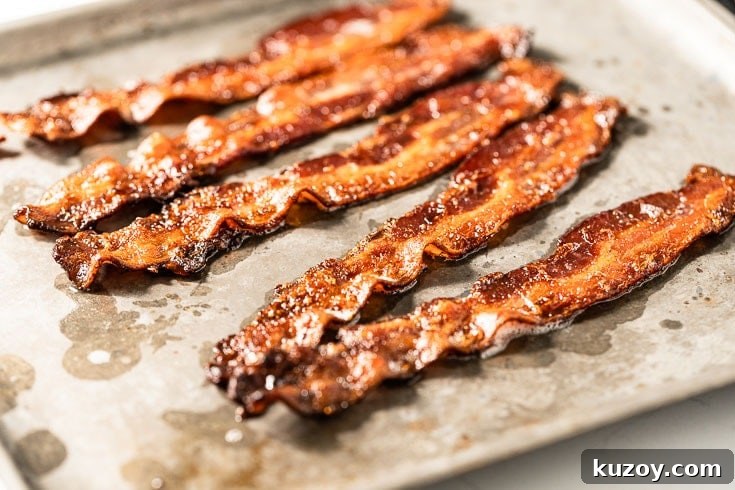
How to Cook Bacon in the Oven
Share
Print
Ingredients
- 8 oz Thick Cut Bacon (or as much as you want)
- Drizzle of water (about 1 tbsp per 1/2 lb bacon)
Instructions
-
Place bacon strips on a foil-lined rimmed baking sheet.
-
Drizzle a little water over the bacon (about 1 tbsp per 1/2 lb).
-
Place the sheet in a cold oven and set to 400°F (convection if available).
-
Bake about 20 minutes, watching closely as ovens and bacon thickness vary.
-
Flip the bacon with tongs, rotate the pan, and bake another 5–10 minutes to desired crispness.
-
Transfer strips to a paper towel-lined plate and blot to remove excess fat.
-
Serve warm or refrigerate for reheating later.
Notes
- Cooking times will be shorter if your oven is preheated.
- Bacon can be made ahead and reheated.
- Reserve rendered bacon fat for other recipes if it isn’t burned.
Video
Tried this recipe?
Let us know how it turned out!