less than 30 mins
10 to 30 mins
Makes 12 slices
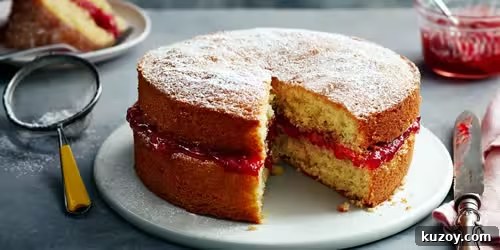
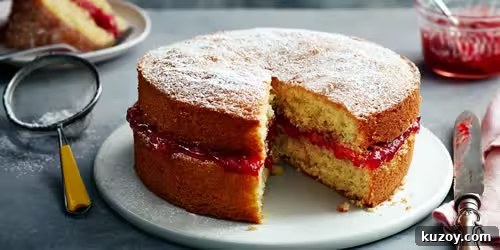
Mary Berry Victoria Sponge Perfection
The Victoria sponge is a timeless British classic and a perfect Sunday treat. This Mary Berry version is straightforward and reliable: everything goes into one bowl, you mix, pour and bake. It’s ideal for novice bakers who want an impressive result with minimal fuss.
Follow this tried-and-true method and you’ll end up with a light, tender sponge filled with jam (and cream if you prefer). It’s a favourite recipe for a reason.

From The Mary Berry Story
Ingredients
- 4 free-range eggs
- 225g/8oz caster sugar, plus a little extra for dusting the finished cake
- 225g/8oz self-raising flour
- 2 tsp baking powder
- 225g/8oz baking spread, margarine or soft butter at room temperature, plus a little extra to grease the tins
To serve
- good-quality strawberry or raspberry jam
- whipped double cream (optional)
Method
- Preheat the oven to 180C/350F/Gas 4.
- Grease and line two 20cm/8in sandwich tins. Rub a little baking spread or butter around the inside with a piece of baking or silicone paper so the sides and base are lightly coated. Cut circles of baking paper to fit the base of each tin.
- Break the eggs into a large mixing bowl and add the sugar, flour, baking powder and baking spread.
- Mix until just combined. An electric hand mixer makes this easiest, but a wooden spoon will do. Put a damp cloth under the bowl to stop it moving. Stop mixing as soon as the ingredients are blended — the batter should be soft and “dropping” in consistency, falling off a spoon easily.
- Divide the mixture evenly between the tins. It needn’t be exact, but you can weigh the tins if you prefer. Use a spatula to transfer all the batter and smooth the surface gently.
- Place the tins on the middle shelf and bake for about 25 minutes. Avoid opening the oven door while they cook; after 20 minutes you can check through the oven window.
- The cakes are ready when they are pale golden-brown and starting to come away from the sides. They should feel springy when pressed lightly. Cool in the tins for five minutes, then run a palette or rounded knife around the edge and turn them out onto a cooling rack.
- To avoid a wire-rack mark on top, cover the tin with a clean tea towel, place your hand over the towel and invert the tin. The cake should come onto your hand and the towel; transfer it to the rack from there.
- Leave to cool completely before assembling.
- To assemble, place one cake upside down on a plate and spread a generous layer of jam over it. Add whipped cream if you like.
- Top with the second cake, top-side up, and dust the surface with caster sugar.
VIDEO
TOP TIPS
This recipe is simple but benefits from attention to a few details. These tips will help you get a perfect Victoria sponge every time.
Mary’s advice:
1. Use the right ingredients and the all-in-one method Mary recommends. Beat enough to combine the ingredients, but do not over-mix.
2. Line the tins and bake at the correct temperature. Too hot and the cake will dome; around 160–180C is appropriate and the bake time is typically 20–30 minutes.
3. The cake is done when it is pale golden, has shrunk slightly from the tin edges and springs back when pressed gently. Turn it out carefully, let it cool, then sandwich with jam and a sprinkling of caster sugar.
Room temperature: Make sure eggs and fat are at room temperature to avoid curdling and to give the sponge a good rise.
Work quickly: The method works best if you don’t dawdle.
Eggs: Use fresh eggs. If you prefer, whisk whites and yolks separately for extra lift, folding them in gently.
Incorporate air: Cream butter (or spread) and sugar thoroughly to trap air — this improves texture.
Flour choice: Sift the flour. Using cake flour or adding a little cornflour can give a lighter crumb.
Folding: Fold flour in gently with a metal spoon to retain as much air as possible.
Cake tins: Light-coloured tins reflect heat better and reduce the risk of darkening the crust. Weighing batter into tins ensures even layers.
Oven: Ensure your oven is accurate and preheated. Avoid opening the door while baking.
Serving: Allow cakes to cool fully before sandwiching and slicing with a sharp knife.
If things go wrong: If a sponge sinks or becomes uneven, don’t discard it — cut into cubes and use in a trifle.
VERSATILITY
The basic Mary Berry Victoria sponge batter is versatile. You can make cupcakes, add cocoa for a chocolate version, bake mini sponges, or use rectangular tins for slices. Fillings can vary from jam alone to jam plus buttercream or whipped cream. Buttercream fillings keep better at room temperature, while fresh cream offers a lighter finish that enhances the jam’s flavour.
Some bakers add cornflour to reduce gluten and create an even airier texture. Mary Berry notes that margarine can produce a lighter texture than butter in the all-in-one method, though both work well depending on preference.
STORING SHORT-TERM
Store at room temperature in an airtight container. Do not refrigerate, as refrigeration dries out sponge cakes. The cake is best eaten the day it’s made, but will keep well for up to three days at room temperature if stored properly.
STORING LONG-TERM
For long-term storage, freeze the unfilled layers with their base papers on for up to three months. Wrap each layer in foil and place in a freezer bag. Thaw slowly at room temperature before filling and serving.
History behind the Mary Berry Victoria Sponge

Queen Victoria
In 1861, after many years on the throne, Queen Victoria mourned the death of her husband Prince Albert. That same year Mrs Beeton’s Book of Household Management included a recipe for “Victoria Sandwiches,” cementing the cake’s place in British culinary tradition.
4 eggs
Their weight in pounded sugar, butter and flour
1/4 saltspoonful of salt
A layer of any kind of jam or marmalade.
Beat the butter to a cream; dredge in the flour and pounded sugar; stir these ingredients well together, and add the eggs, which should be previously thoroughly whisked.
When the mixture has been well beaten for about 10 minutes, butter a Yorkshire-pudding tin, pour in the batter, and bake it in a moderate oven for 20 minutes. Let it cool, spread one half of the cake with a layer of nice preserve, place over it the other half of the cake, press the pieces slightly together, and then cut it into long finger-pieces; pile them in cross bars on a glass dish, and serve. Time.— 20 minutes. Average cost, 1s 3d. Sufficient for 5 or 6 persons. Seasonable at any time.
Anna Maria Russell

Anna Maria Russell, the 7th Duchess of Bedford, is credited with popularising afternoon tea in the 19th century. Needing a light snack between lunch and a late dinner, she began inviting friends for tea and snacks, and the tradition grew. Early afternoon tea cakes for children avoided fruit and seeds, which led to the rise of the plain Victoria sponge as a teatime favourite for all ages.
By the late 19th century the Victoria sponge was a staple at tea parties and later became a benchmark for home bakers. Organisations such as the Women’s Institute developed strict guidelines for a “correct” Victoria sponge, favouring raspberry jam and caster sugar without buttercream in their competitions. Decades on, the Victoria sponge remains a beloved test of baking skill and a comforting staple in British kitchens.