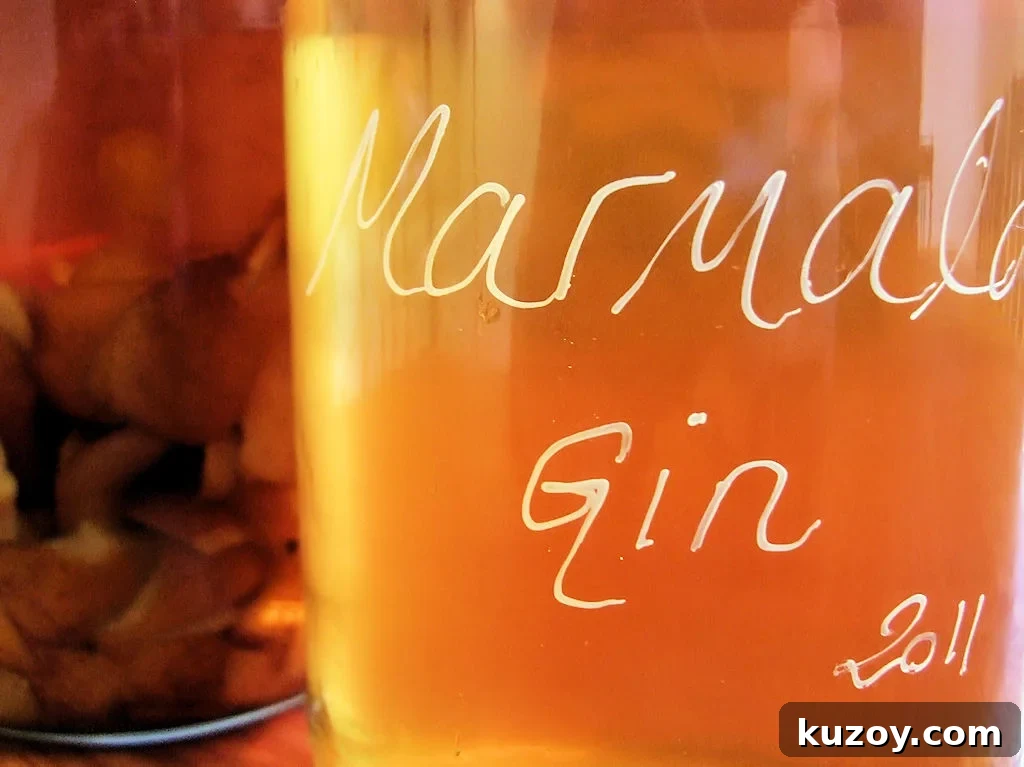
In December last year our friend Deborah brought us about 50 lb of oranges from her father’s grove in East Texas after we had been talking about making fruit liqueurs. I hadn’t realised how many oranges that would be. Unlike apples, peaches or berries, oranges offer a limited range of uses, so about half were sent to Bill for marmalade. That still left more than I needed, though the freshly squeezed pints of orange juice were a welcome bonus.
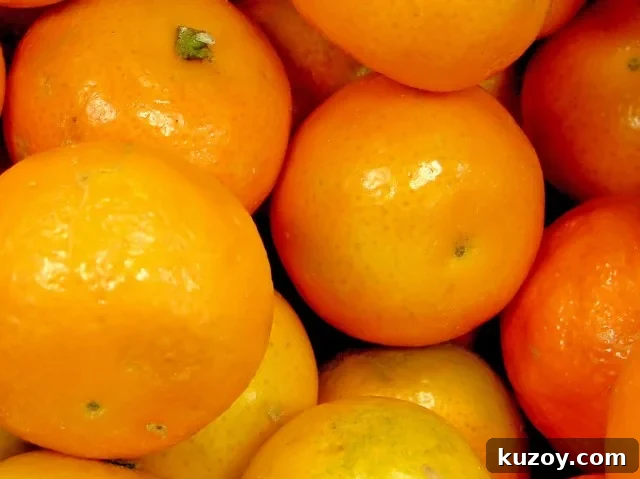
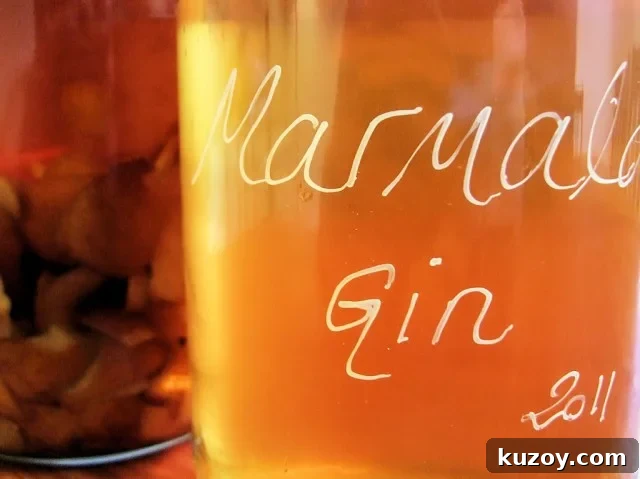
There are many commercial orange liqueurs on the market — Curaçao, Grand Marnier and Triple Sec among them — but making your own is cheaper and far more satisfying. As with most homemade fruit liqueurs, the basic components are fruit, spirit, sugar and time. My orange gin liqueur differs slightly because I use only the orange peel, not the fruit. Over time this yields a deep orange-coloured liqueur with a strong aroma of orange oil and a distinct marmalade-like flavour. Because no juice is present to dilute or influence the final strength, I add water to balance the spirit and round out the taste.
You can substitute vodka or another neutral spirit if you prefer, but I like the aromatic botanicals gin contributes. You don’t need an expensive bottle — pick a gin you’d be happy to sip on its own to avoid an overly harsh final product.
Ingredients
- 10 medium oranges, peeled
- 300 g (10 oz) cane sugar
- 700 ml (24 fl oz) good, reasonably priced gin
- 300 ml (10 fl oz) water
Method
Begin with a clean, large wide-mouthed preserving jar with a tight-fitting lid that holds at least 1 litre (34 fl oz). Sterilise the jar and lid. Wash the oranges gently — avoid scrubbing the peel too hard so you retain the essential oils. Using a vegetable peeler or a sharp knife, remove the peel from each orange, taking care not to include too much of the white pith, which can taste bitter.
Place the peels from the 10 oranges into the sterilised jar. Add the gin, sugar and water, then gently swirl or stir until the sugar has largely dissolved. Seal the jar tightly and store it in a cool, dark place for a minimum of three months; a longer maceration will deepen the flavour and colour. If you want a slightly spiced, more seasonal profile, add three or four whole cloves to the jar at the start.
After the infusion has matured, strain out the peels (and cloves if used), and decant the liqueur into clean bottles. Serve it as an after-dinner sipper, as an aperitif with soda, mixed into cocktails, or drizzled over ice cream for a boozy, citrusy finish.
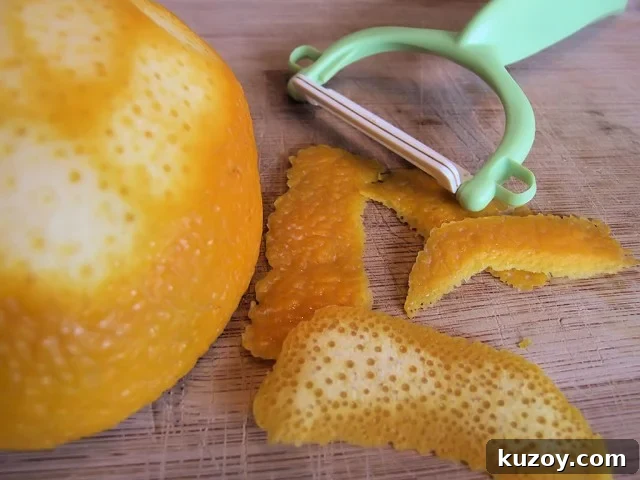
Removing the peel from an orange