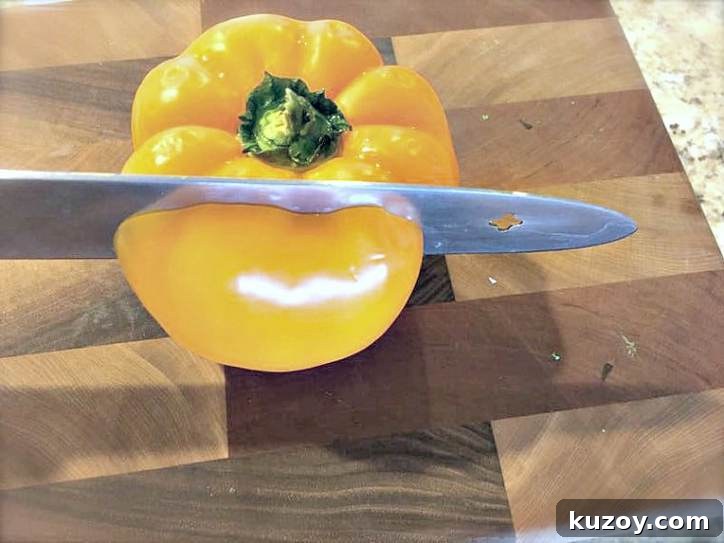
Today we welcome Doug the Kitchen Professor back to Loaves and Dishes. Doug is sharing a clear guide on how to cut a bell pepper, with photos and practical tips. Please join us in welcoming him and consider checking his website for more kitchen advice.
Bell peppers are versatile and add flavor, color, and texture to soups, sandwiches, fajitas, and pastas. They can be roasted, stuffed, grilled, or enjoyed raw with dips like hummus. Because of their shape and the seeds inside, cutting bell peppers can feel awkward at first. Whether you’re prepping peppers for a large meal or fine-tuning presentation, the right technique makes the job quick and tidy. Below is a straightforward method for cutting bell peppers into strips, slices, dice, and for preparing them for stuffing.

Find more from Doug at The Kitchen Professor.
Pick a pepper
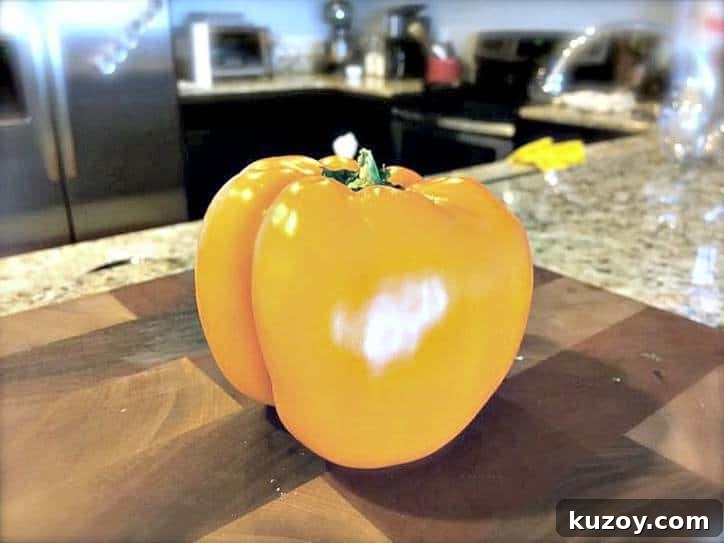
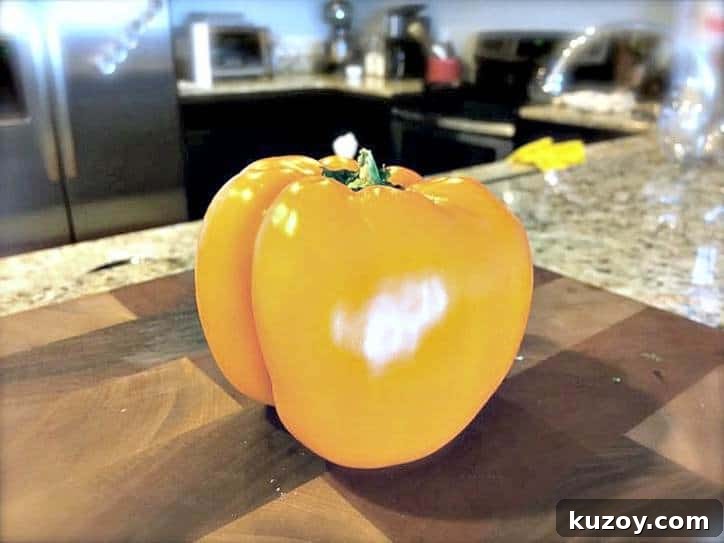
Good results start with good produce. Choose peppers with smooth, firm skin and bright, even color—green, red, orange, or purple. Avoid peppers with wrinkles, soft spots, or brown blemishes. If you buy from the grocery store, select peppers individually rather than from shrink-wrapped multi-packs so you can inspect each one.
Heft is another clue: a ripe pepper feels substantial for its size. Store peppers in the vegetable crisper or an open plastic bag in the refrigerator; do not seal them tightly, or they may develop mold. Properly stored, fresh peppers will keep for about a week.
Cutting technique
Use a sharp chef’s knife or a Santoku for bell peppers. A sharp blade is safer and cleaner; if your knives need attention, use a suitable sharpener or have them professionally sharpened.
Strips and slices
Strips and slices are the foundation for many recipes—fajitas, sandwiches, salads, and stir-fries.
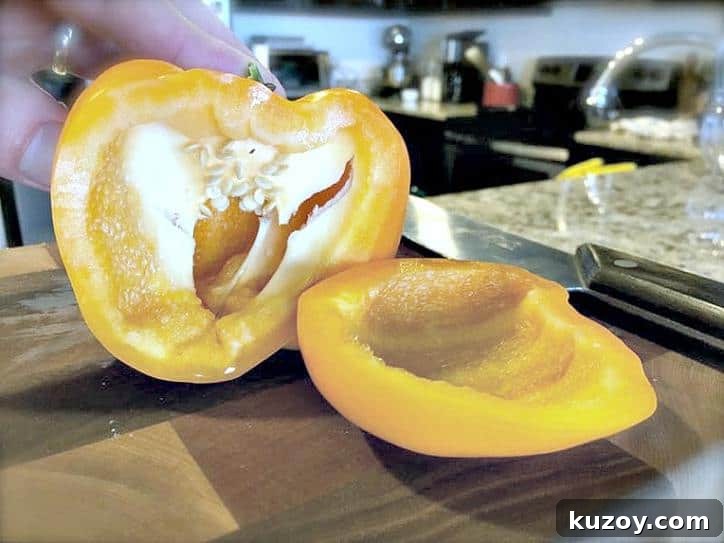
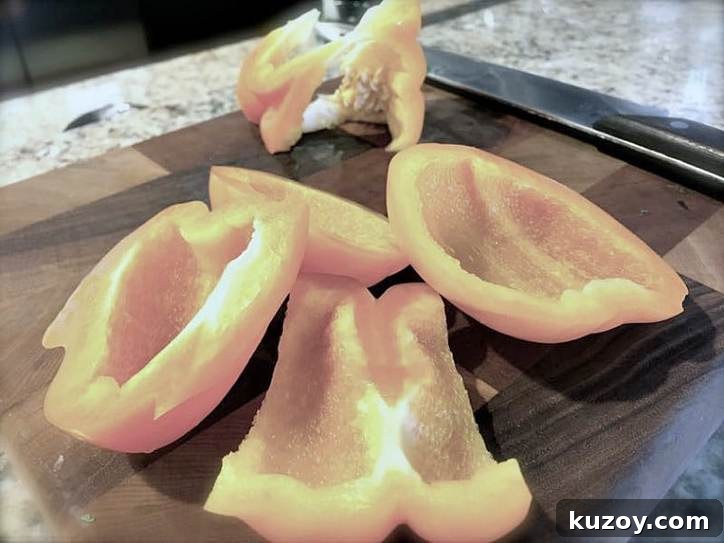
- Start by cutting the pepper vertically down one side, then repeat on the remaining three sides so you end up with four flat panels and the core removed. This method avoids cutting through the stem and keeps seeds contained.
- Trim away any remaining white ribs from each panel with a paring knife; the ribs are tougher and slightly bitter.
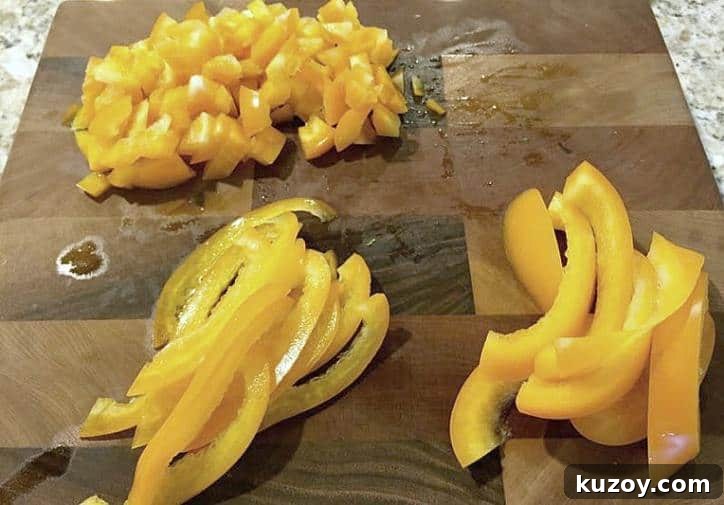
- Place the panels skin-side down and slice lengthwise to create strips. For fajitas and stir-fries, cut into longer, wider strips; for sandwiches or salads, slice thinner.
- If any small white ribs or seeds remain, trim them off as you go.
Sliced peppers are ideal for fajitas; very thin slices work well in sandwiches and salads for a crisp texture and bright color.
Diced
Diced peppers are useful in sautés, gumbos, omelets, and any recipe that calls for uniform small pieces.
- Begin by cutting the pepper into strips as described above.
- Rotate the strips 90 degrees and cut perpendicular to create uniform cubes.
- Adjust the spacing of your cuts to make larger or smaller dice depending on the recipe.
Step-by-step photo sequence
Preparing peppers for stuffing
Stuffed peppers are satisfying and versatile. To prepare a pepper for stuffing:
- Trim the stem down as much as possible with a paring knife to create an even opening.
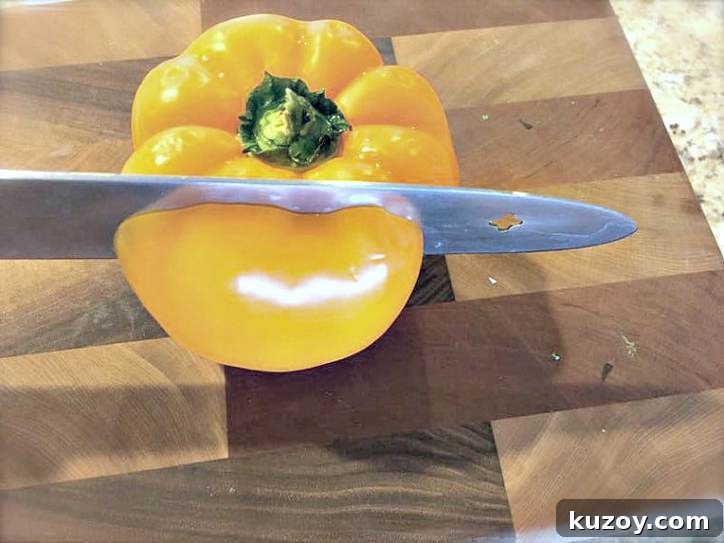
- Using a chef’s knife, slice the pepper in half across the middle (along its equator) so you have two open cups.
- Use a paring knife to remove the white membrane and the inner ribs, then pull out the seeds by hand.
- Your pepper halves are now ready to be filled with your chosen stuffing and baked or roasted.
Conclusion
Cutting bell peppers becomes quick and consistent once you follow a few simple steps: choose fresh, firm peppers, use a sharp knife, remove the core and ribs, and cut to the size that suits your recipe. With a little practice you’ll be slicing, dicing, and preparing stuffed peppers with ease. Do you have any go-to tips for cutting bell peppers?