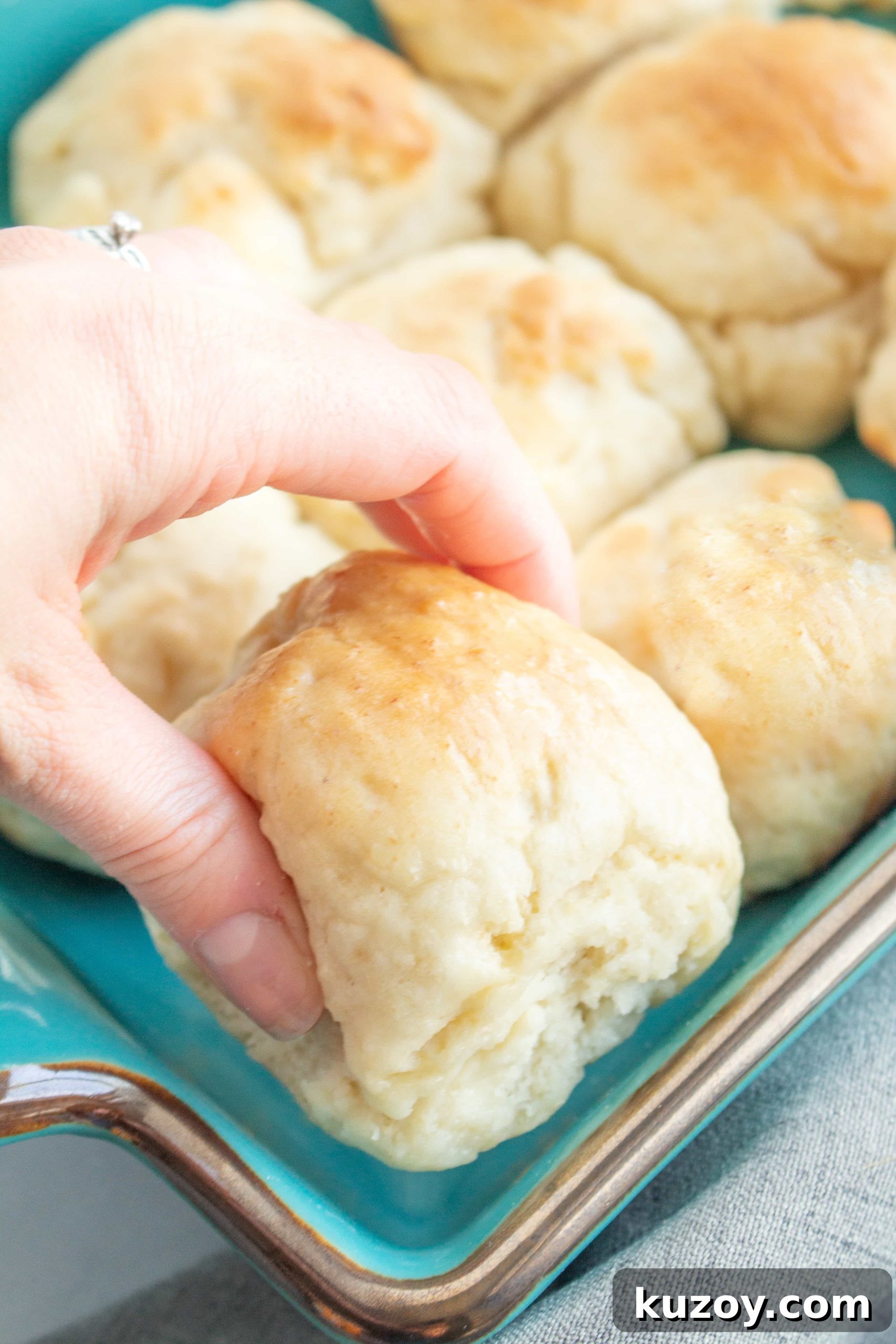
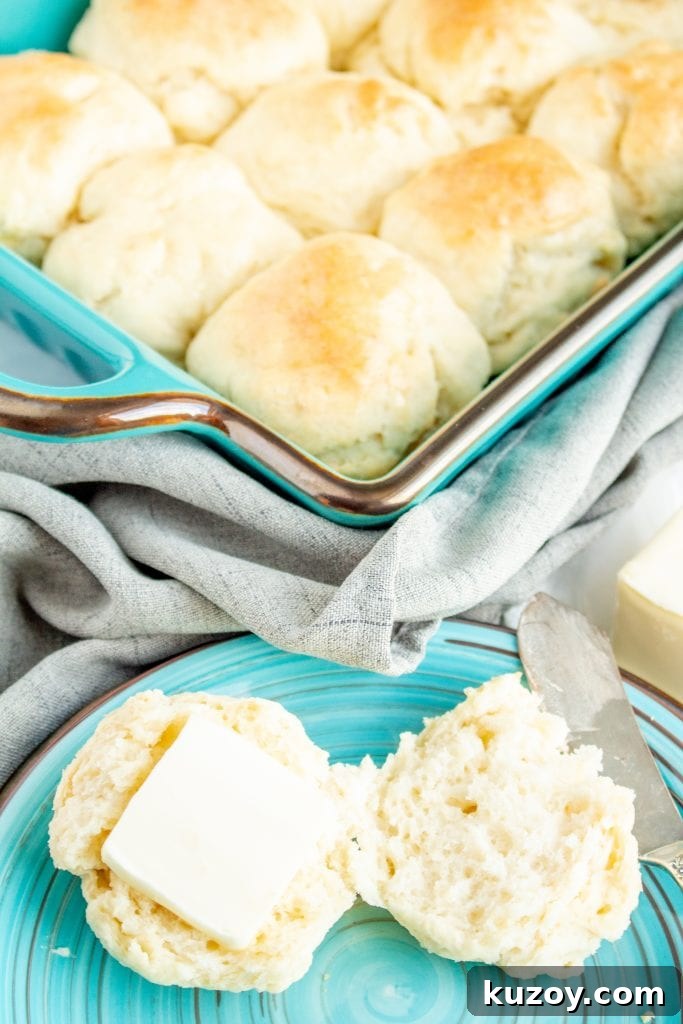
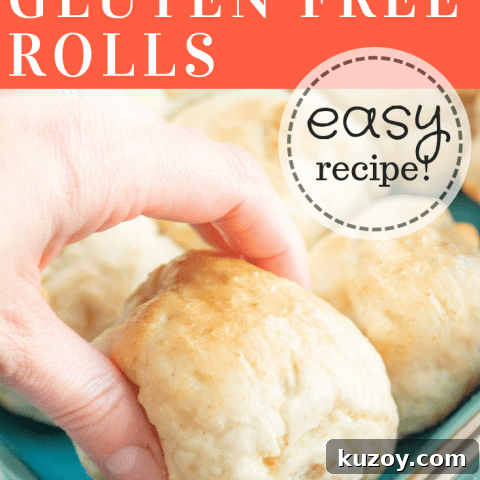
These gluten-free rolls are soft, fluffy and easy to make. Ready in about an hour, they’re a perfect side for any meal and loved by everyone—gluten-eaters included. Dairy-free option available.
Craving soft, pillowy rolls? These gluten-free dinner rolls don’t taste “gluten-free” and are very simple to make. You won’t need a dozen specialty flours or hard-to-find ingredients—just a few staples and about an hour from start to finish.
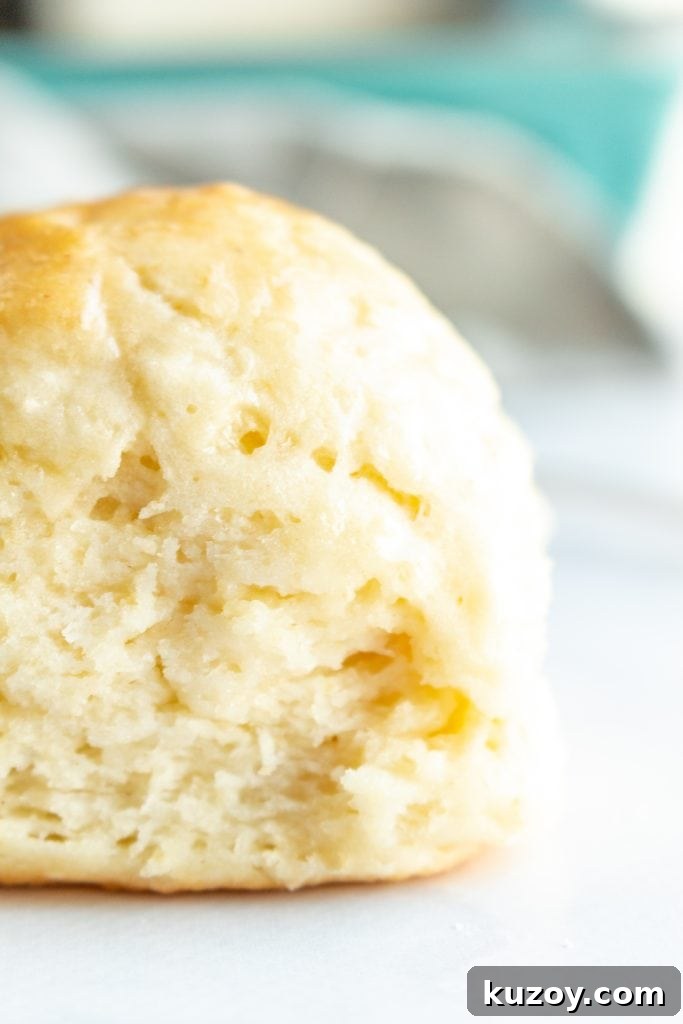
Is this your first time making gluten-free bread rolls?
Gluten-free yeast dough behaves differently than wheat-based dough. I learned the hard way that simply swapping a gluten-free flour into a wheat recipe often fails. These rolls use techniques that work reliably for gluten-free yeast baking.
Key differences and tips:
- Extra liquid. Gluten-free flour absorbs more moisture, so the dough will be wetter than traditional dough. This extra liquid keeps the rolls soft and tender.
- No kneading. Gluten provides elasticity that requires kneading. A gluten-free blend that contains a binder like xanthan gum replaces that need—mix and move on.
- One rise is enough. Without gluten, the dough rises best with a single proof.
- Use a paddle attachment. The dough is more like a thick batter than conventional dough, so the paddle attachment works better than a dough hook.
Ingredients in gluten-free rolls
Full amounts and instructions are in the recipe card below. The recipe avoids unnecessary extras like vinegar or baking powder when you’re using a suitable gluten-free flour blend.
- Gluten-free all-purpose flour blend formulated for yeast breads. (See notes for recommended options.)
- Instant potato flakes (instant mashed potato flakes, not potato flour) — optional but improves texture. Use unflavored flakes.
- Gluten-free instant yeast at room temperature. Active dry yeast can be used but will increase rise time.
- Sugar (or substitute honey).
- Salt.
- Powdered milk for flavor and browning. Substitute powdered coconut milk or omit for dairy-free rolls.
- Butter softened; use a vegan butter stick for dairy-free.
- Egg for structure and rise. Use an egg replacer for egg-free versions.
- Warm water, just warmer than room temperature.
- Psyllium husk powder (optional) improves texture when available.
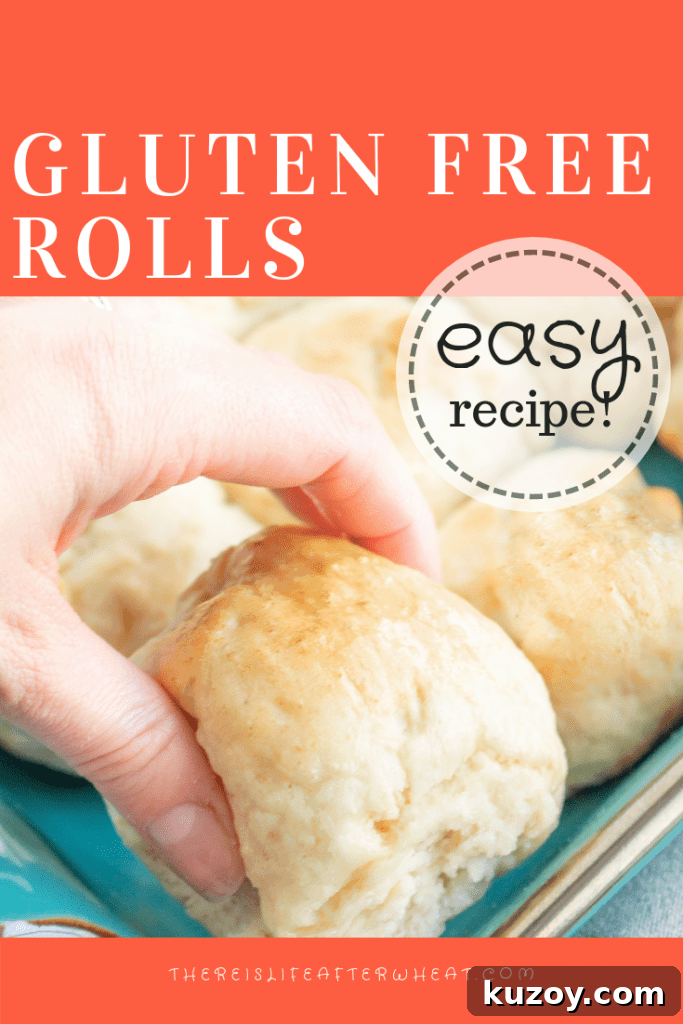
How to make gluten-free rolls
These rolls are easier than traditional wheat rolls and taste just as good. Basic steps:
Step 1: Add ingredients
Place dry ingredients in the bowl of a stand mixer fitted with the paddle attachment, then add the wet ingredients.
Pro tip: A hand mixer can work if you don’t have a stand mixer—use a large bowl so the batter doesn’t climb the beaters.
Step 2: Mix
Mix on low until combined, then increase to medium and beat 3–4 minutes. The batter should be like thick banana bread—too sticky to handle. If it’s too thick, add 1–2 tablespoons of water; if too thin, add flour 1 tablespoon at a time.
Step 3: Shape dough
Shape rolls by scooping batter with an ice cream scoop or divide into 12 pieces and form balls. Coat hands with tapioca starch, a little water, or oil to prevent sticking. Place scoops or balls in a greased 9×13″ pan.
Step 4: Rise dough
Loosely cover and let rise in a warm place for 30–60 minutes until doubled. If your oven has a proof setting, use it; otherwise warm the oven to a low temperature (about 170°F), turn it off, briefly open the door to cool slightly, then place the pan inside to rise.
Step 5: Bake
When doubled, brush tops with egg wash (optional) for better browning and bake at 350°F until light golden and cooked through—about 17–20 minutes. If you omitted powdered milk or the egg wash, rolls may brown less; check doneness internally.
Remove from the oven and brush with melted butter or a dairy-free alternative. Serve warm—these are especially good for holidays and make excellent sandwich rolls.
Looking for more gluten-free bread recipes? Try gluten-free crescent rolls, gluten-free sandwich bread, or a festive gluten-free Julekake.
Gluten-free baking tips
- Measure flour with the stir, scoop, and level method—don’t pack the cup.
- Use a gluten-free blend suited for yeast breads; different blends behave differently.
- Read notes and tips carefully—small adjustments (altitude, humidity) can affect dough consistency.
Dairy-free and vegan variations
Dairy-free: Use powdered coconut milk and a dairy-free butter stick (such as a preferred brand). Vegan: Use powdered coconut milk, dairy-free butter, and an egg replacer such as Bob’s Red Mill; skip the egg wash.
Make ahead and freezing instructions
To prepare ahead: shape the dough and refrigerate covered in the pan up to 24 hours—bring to room temp and allow to double before baking. For freezing: shape balls on a parchment-lined sheet, freeze solid, transfer to a bag for up to 2 months. Thaw on a greased pan, cover, allow to rise until doubled, then bake.
These rolls pair beautifully with soups, stews, mashed potatoes, and gravy. They also adapt well to creative uses like cinnamon rolls or hot cross bun-style variations.
Frequently asked questions
What is the best gluten-free flour to make bread with?
How do I make gluten-free rolls without eggs?
How long do gluten-free dinner rolls last?
How to serve these gluten-free rolls
Serve them warm as you would traditional rolls: with soups, stews, mashed potatoes, gravy, or use them for sandwiches. Leftovers warm up well in the microwave or toaster oven.
Gluten free bread rolls recipe
Make these? Snap a photo and tag @LifeAfterWheat on social media—we love seeing your results!
Gluten Free Rolls (dairy free option)
Ingredients
- 3 cups high-quality gluten-free flour (see notes)
- 1 tablespoon instant potato flakes (NOT potato flour)
- 1 tablespoon gluten-free instant yeast, room temperature
- 3 tablespoons sugar
- 1 teaspoon salt
- 1/3 cup powdered milk (or powdered coconut milk for dairy-free)
- 1 tablespoon psyllium husk powder (optional)
- 1/4 cup butter, softened (or dairy-free stick)
- 1 egg (or egg replacer)
- 1 1/2 cups warm water
Method
- Grease a 9×13″ pan with cooking spray or butter (or dairy-free alternative).
- Add all ingredients to the mixer bowl in the order listed.
- Mix on low until combined, then medium for 3–4 minutes. Batter will soften and become sticky—consistency of thick banana bread.
- If too dry, add 1–2 tablespoons water. If too wet, add flour 1 tablespoon at a time.
- Scoop batter with an ice cream scoop into the greased pan or divide into 12 pieces and shape. Coat hands with tapioca starch, oil, or water to reduce sticking.
- Loosely cover and let rise in a warm place 30–60 minutes until doubled.
- Brush gently with egg wash (1 egg + 1 tablespoon water) if desired.
- Bake at 350°F for 17–20 minutes until golden and cooked through. If you skipped powdered milk or egg wash, rolls may brown less—check doneness.
- Brush with melted butter or dairy-free alternative after baking. Serve warm.
- The rolls freeze well.
Nutrition (per roll)
Notes
Flour options: Use a gluten-free blend tested for yeast baking. If using a homemade blend, add 1/2 teaspoon xanthan gum per cup of flour.
For dairy-free: Substitute powdered coconut milk and a dairy-free butter stick.
For egg-free: Use an egg replacer measured to replace one egg in yeast recipes.
Psyllium husk: Optional but improves texture when available.
Measuring: Stir, scoop, and level flour—do not pack the cup.