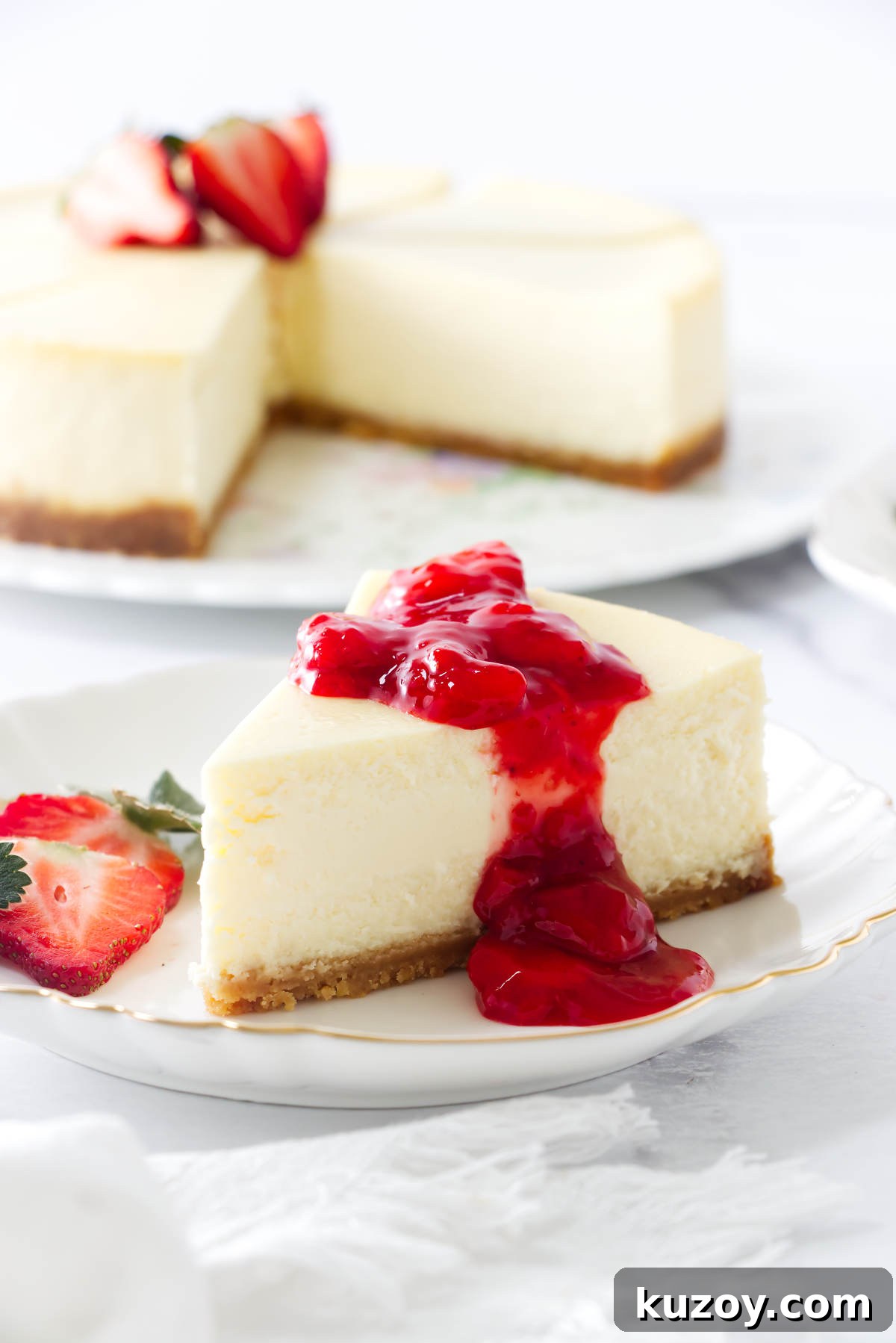
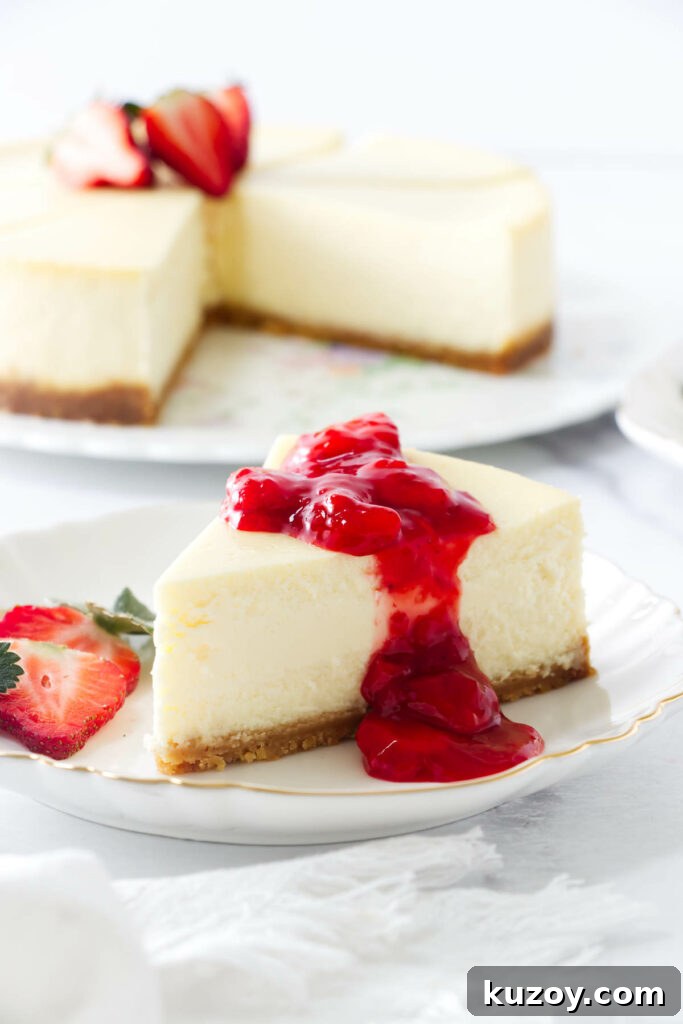
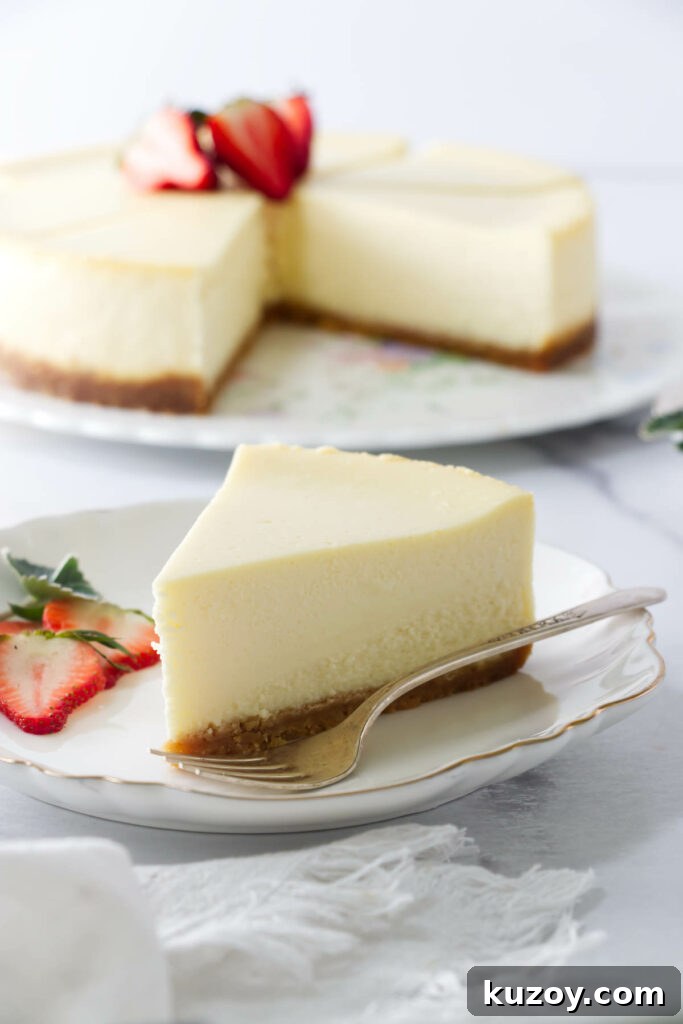
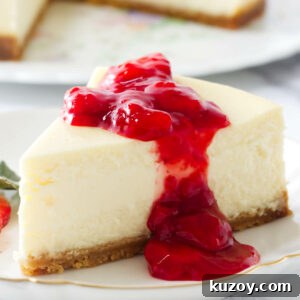
Cheesecake can turn out smooth and creamy without a water bath. This method relies on a low baking temperature and a slow, controlled cool-down to achieve the same results—no wrapping pans or worrying about leaks. The outcome is a classic New York–style cheesecake with a rich, dense texture and a clean, crack-free top.
Why This Cheesecake Recipe Works
Low oven temperature: Baking at 225°F provides the gentle, even heat a water bath would normally deliver. This steady heat helps the cheesecake set evenly, remain creamy, and greatly reduces the likelihood of cracks—without the extra work of a wet pan.
Room temperature ingredients: Softened cream cheese and room-temperature eggs incorporate smoothly, which produces a velvety filling without lumps.
Gradual cooling: Letting the cheesecake cool slowly in the oven prevents sudden temperature changes that can cause the top to crack.
Classic New York–style texture: With a high proportion of cream cheese and a straightforward filling, this cheesecake is rich, dense, and very smooth.
Key Ingredients
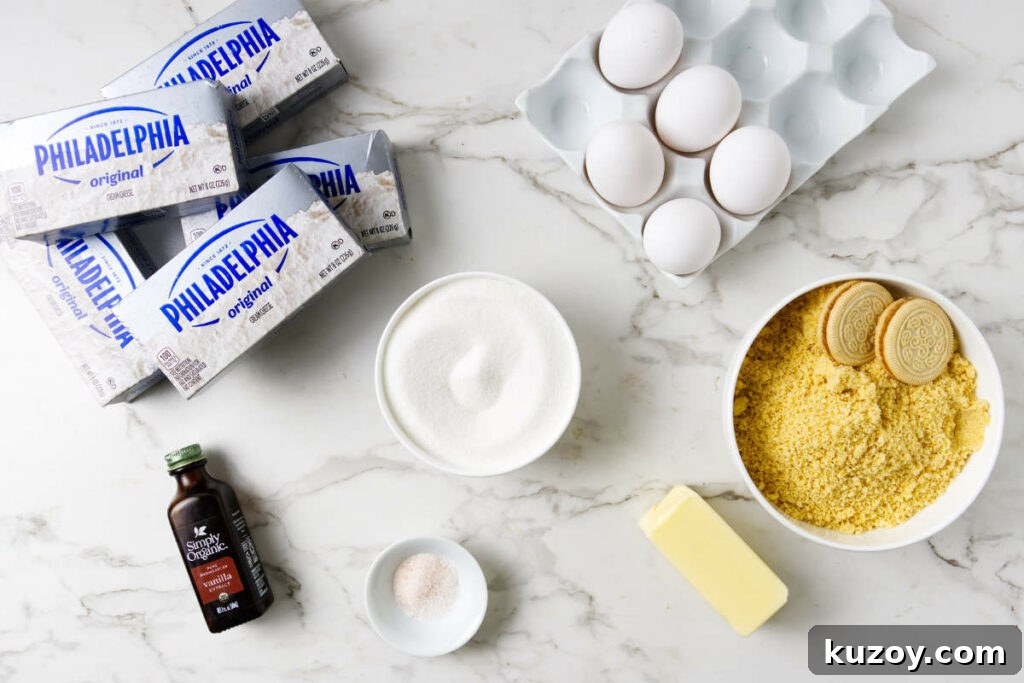
Cream cheese: Use full-fat block-style cream cheese for the best, dense texture. Avoid whipped or tub-style cream cheeses, which contain more air and stabilizers that change the texture.
Eggs: Large eggs are ideal. Bring them to room temperature so they blend smoothly into the batter.
Sugar: Granulated sugar sweetens and helps create a creamy, smooth filling when properly mixed with the cream cheese.
Vanilla extract: A good-quality vanilla extract enhances flavor—don’t skimp on it.
Crust options: Choose the cookie base that matches the flavor you want: graham crackers for a classic crust, Oreo cookies for chocolate, shortbread for buttery richness, or gingersnaps for a spiced note. If using Oreos, reduce the butter slightly to compensate for the cookies’ moisture.
Recipe Tips
Use room temperature ingredients: Softened cream cheese and room-temperature eggs will blend into a smoother batter and reduce lumps.
Beat the cream cheese until smooth: If you start with lumps, sugar and eggs won’t fully smooth them out later.
Scrape the bowl often: Cream cheese clings to the sides and bottom; scraping between additions ensures an even mixture.
Mix gently after adding the eggs: Use low speed and fold eggs in slowly to avoid whipping excess air into the batter.
Do not rush the bake: The low oven temperature is the key to success. Resist increasing heat to shorten cooking time.
Watch for a slight jiggle: The edges should look set while the center retains a small wobble when nudged.
Cool slowly: The gradual oven cool-down minimizes cracks and helps the cheesecake finish setting evenly.
Chill overnight: Refrigerate for at least eight hours, preferably overnight, for the best texture and clean slices.
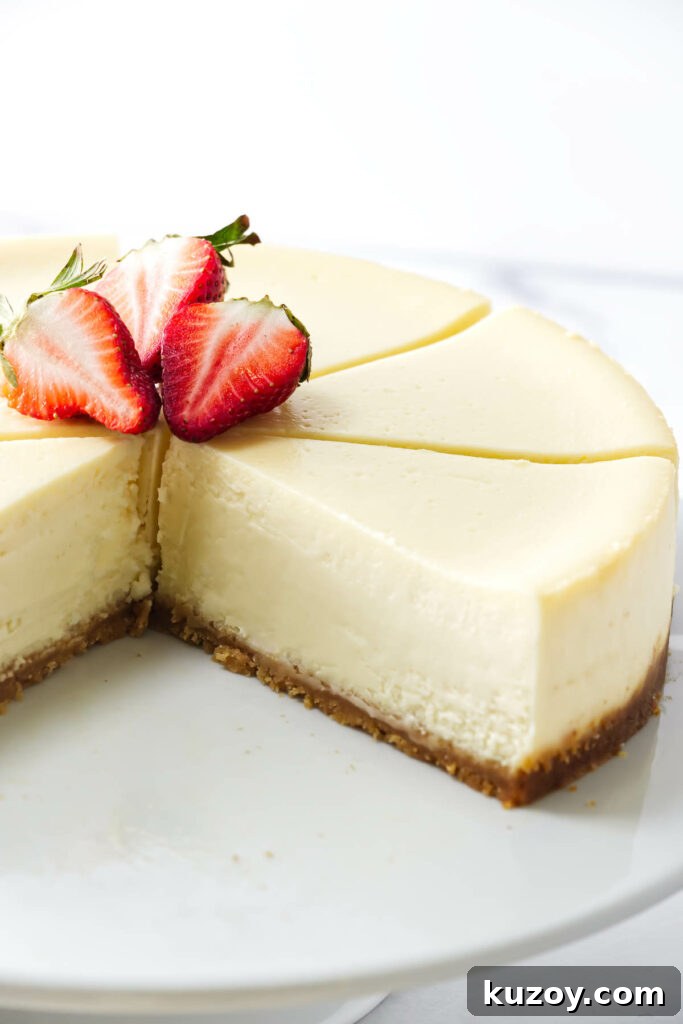
Use a hot knife for clean slices: Wipe a thin knife between cuts after running it under hot water for the neatest presentation.
Foolproof Cheesecake with No Water Bath
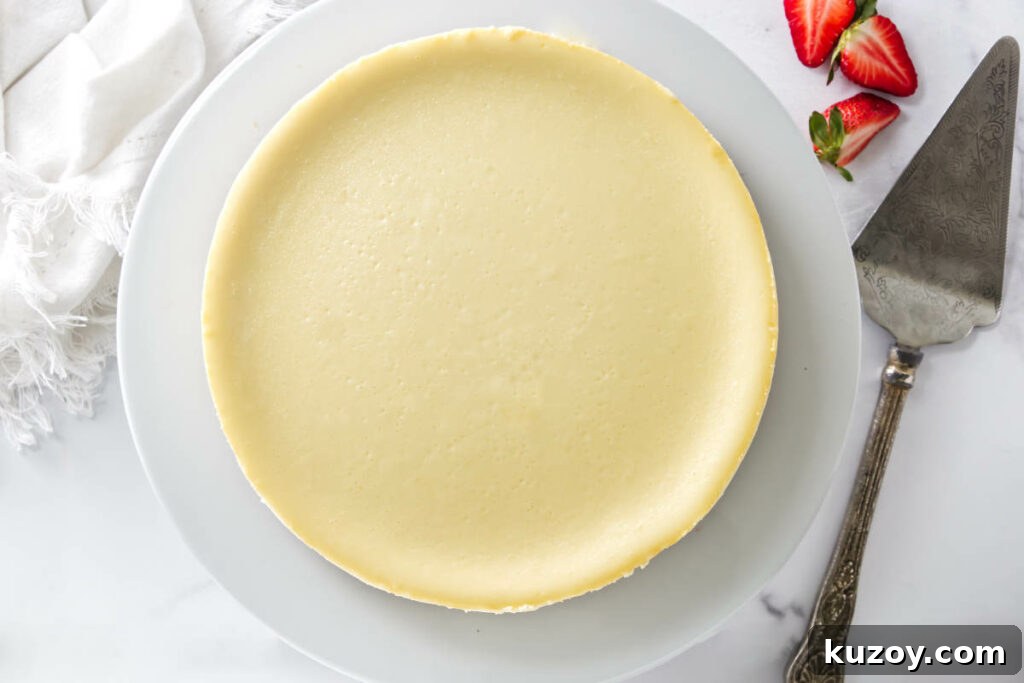
This method shows that a water bath isn’t required to produce a glossy, crack-free cheesecake. By baking at a low temperature and allowing the cake to cool gradually inside the oven, you get a classic New York–style cheesecake that’s rich, smooth, and easy to slice. Once you try this technique, it becomes a reliable go-to for special occasions or weeknight desserts.
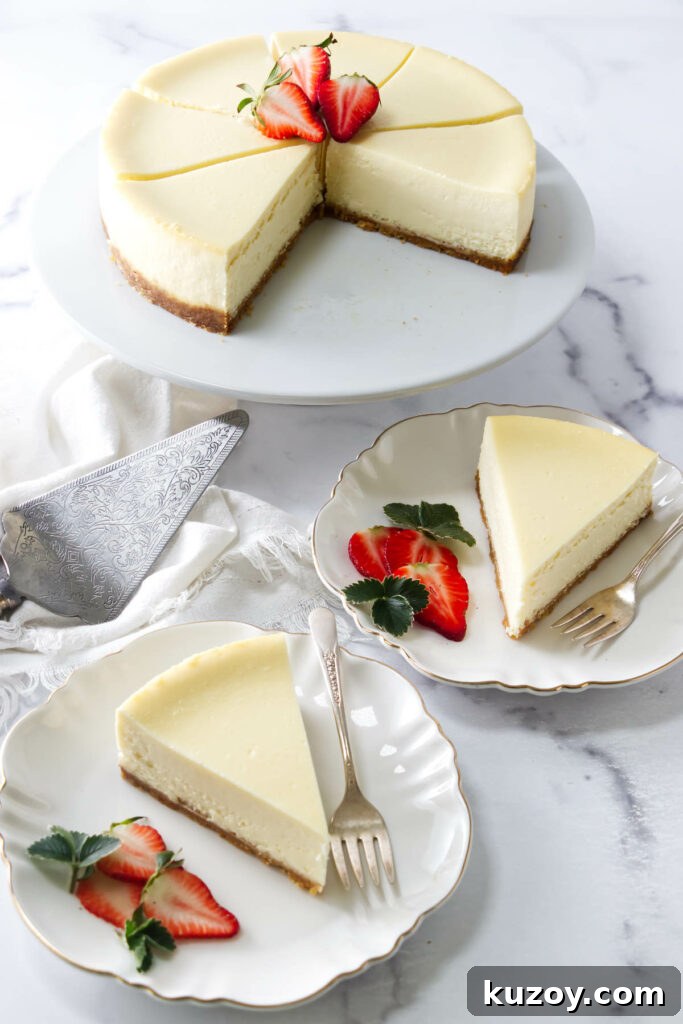
This cheesecake is excellent on its own or served with toppings such as strawberry sauce, salted caramel, or lemon curd for bright contrast.
Cheesecake Recipe (No Water Bath)
If you make this recipe, please leave a star rating and comment.
Ingredients
For The Crust:
- 1¾ cups crushed cookie crumbs
- 3 tablespoons granulated sugar
- 6 tablespoons butter, melted
For the Filling:
- 40 ounces cream cheese, room temperature (5 × 8‑ounce packages)
- 1 ⅓ cups granulated sugar
- 2 teaspoons vanilla extract
- ½ teaspoon salt
- 5 large eggs, room temperature
Instructions
-
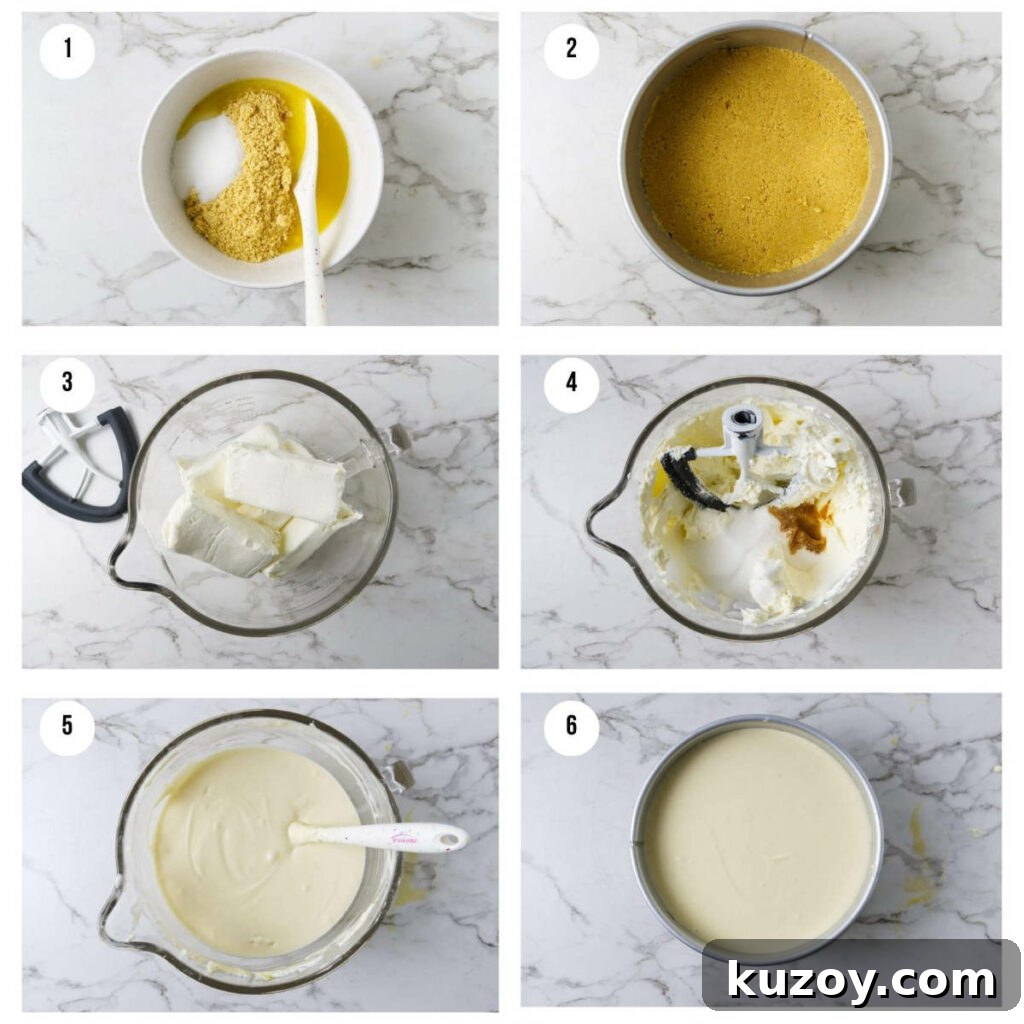
Preheat the oven to 350°F. Grease a 9-inch springform pan and optionally line the bottom with parchment for easier removal.
-
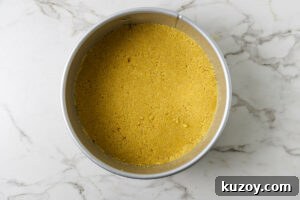
Make the crust. Mix the cookie crumbs, sugar, and melted butter until evenly combined. Press the mixture firmly into the bottom of the prepared pan.

-
Bake the crust for 8 to 10 minutes. Remove from the oven and let it cool while you prepare the filling.
-
Reduce oven temperature to 225°F. Allow the oven to cool to this temperature while you assemble the filling.
-
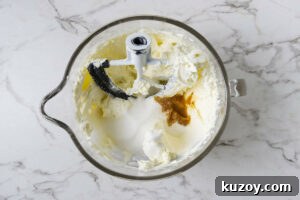
Make the filling. In a large bowl, beat the cream cheese until smooth. Add sugar, vanilla, and salt, mixing until combined. Scrape the bowl as needed to keep the mixture smooth.
-
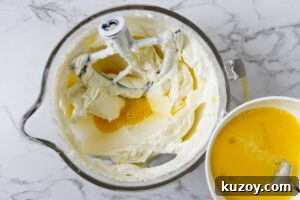
Add the eggs one at a time, mixing on low speed just until each is incorporated. Scrape the bowl after each egg and avoid overmixing once eggs are added.
-
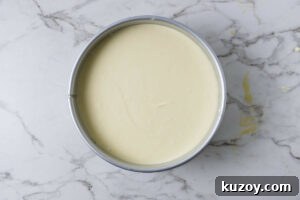
Fill the pan. Pour the batter over the cooled crust and smooth the top.
-
Bake at 225°F for 1 hour 25 minutes. The edges should be set while the center retains a slight jiggle. If the entire cheesecake is wobbling, bake a few more minutes.
-
Turn the oven off and leave the door closed for 30 minutes. After 30 minutes, crack the oven door and let the cheesecake cool in the oven for another 30 minutes.
-
Remove and cool completely. Let the cheesecake come to room temperature on a cooling rack.
-
Chill before serving. Cover and refrigerate for at least 8 hours or overnight before removing from the pan and slicing.

Notes
This recipe uses 5 packages (8 ounces each) of cream cheese for a total of 40 ounces.
Bring the cream cheese and eggs to room temperature before mixing to ensure a smooth batter.
After baking, turn off the oven and leave the door closed for 30 minutes, then crack the door and cool for another 30 minutes. This slow cooling helps prevent cracks.
Use the regular bake setting—not convection—for a gentler, paler top.
For the most accurate doneness, an instant-read thermometer should read about 145°F to 150°F in the center.
Nutrition
Nutrition information is automatically calculated and should be used as an approximation.
 Like this recipe? Rate & comment below!