
How to Have A Daily Routine (With Kids)
and Free Time Blocking Printable

Having a daily routine as a stay-at-home mom (or a working mom) can be challenging
I love a good schedule, but in real life it usually functions as a flexible guideline more than a rigid plan.
Flexibility is essential. Kids are unpredictable and curveballs happen all day long. You can plan to start fresh on Monday, only to wake up with a sick child and a partner who forgot to reset an alarm. Those moments derail your original plan, but they don’t have to ruin your whole day.
After a disruption, the key is to adapt: reassess what’s essential, rearrange tasks, and move forward. Below are practical strategies that help me maintain structure without losing sanity.
1. Have a plan for your daily routine
A detailed plan is best.
Many people avoid scheduling because they believe their day will change anyway. In my experience, not having any plan usually leads to feeling overwhelmed and behind. A plan gives you a flexible framework you can adjust as needed.
Having a plan gives you freedom to evaluate and change it
I use time blocking to outline my day. I expect changes, but the blocks let me quickly decide what can be postponed and where to resume. When you have something to adjust, you feel more in control.
Kids thrive with structure
From my background as an elementary teacher, I learned that children feel safer and happier when their environment includes schedules and routines. That same structure at home promotes security, cooperation, and calm.
My typical morning and early afternoon time-blocked outline (school year version)
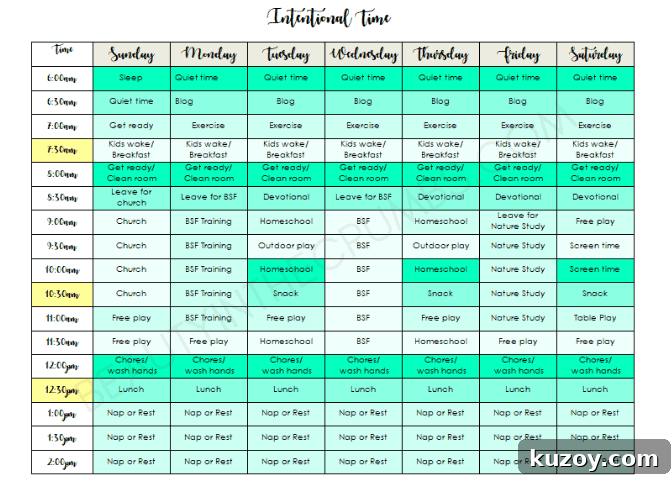
This is a basic outline rather than a minute-by-minute plan. Meal times are highlighted because my kids are motivated by food, and I include a couple of blocks just for me (marked M). Most days follow the same structure, so I place recurring items in the center of the weekly view.
The outline doesn’t list every detail—appointments, special activities, and chore specifics are added as needed. If you want a printable version of this layout, you can use the free time blocking sheet below.

FREE Intentional Time Blocking Printable
If you’d like, I can share a more detailed example of how these blocks map to our family’s specific tasks and routines.
2. Hold the plan loosely
Schedules are tools, not tests. If something derails your plan, it doesn’t mean you failed. Life with people—especially kids—will interrupt your best-laid plans, and that’s normal.
Typical disruptions include meltdowns, extended play during cleanup, unexpected messes, small accidents, or sickness. None of these are reasons to shame yourself; they’re reasons to adjust.
Not all disruptions are negative
Sometimes interruptions are blessings: a child unexpectedly wants to cuddle, storytime runs long because everyone is engaged, play stretches into imaginative learning, or a meaningful conversation happens at breakfast. When these moments arise, consider bending your plan to embrace them.
Keep structure, but be sensitive and flexible. Respond to the needs of your family while maintaining the outline that keeps your day moving.
3. Limit social media and TV
These are major time sinks. Social platforms, Pinterest scrolling, and binge-watching can silently eat hours that would be better spent on priorities.
Entertainment is fine—when it’s intentional
I’m not against relaxation. Watching a show or scrolling during nap time is okay if it’s planned and doesn’t regularly interfere with responsibilities. If you find screens repeatedly replacing necessary tasks, it’s time to set boundaries.
To curb screen time, try practical strategies:
- Keep your phone out of sight during focused blocks
- Schedule specific times to check social media or watch shows
- Use a timer to prevent accidental overuse
For me, scheduling moments to connect online and to unwind with shows prevents mindless scrolling. Being intentional about screen time improves productivity and often results in more meaningful face-to-face time with family.
4. Pick three priority tasks each day
There will always be more to do than time allows. Choosing three non-negotiable priorities gives your day focus and prevents overwhelm.
Each morning, after quiet time, I check my planner and list three tasks I must complete. If I’m tempted to rest, I ask whether those top three are done. If they are, a short break is earned. If not, I decide whether a quick win will allow me to recharge and then finish the rest.
To choose the three, I ask:
- What is most important today?
- What can’t wait until tomorrow?
- Does anything have a deadline?
Often priorities involve meals or shopping because feeding the family is essential. Writing down the top three keeps them visible and helps you return to what matters when the day gets noisy.
Different tools work for different people—printables, apps, or a simple notebook. Find what helps you list and review those top priorities daily.
Now it’s your turn: what strategies help you maintain routine at home? Do you have a favorite planner or time-blocking approach? Share what works for you!