One question we get asked a lot here at The Chilliking is how much should I water my pepper plants?
Below we’ve compiled practical tips to help you provide the right amount of water so your peppers can thrive.
Watering Tips for Chilli Plants
- Use clear plastic drinking cups for seedlings. They’re inexpensive and let you see root and soil moisture. The surface can look dry while the soil just a centimeter or two below remains moist, so visual access helps avoid over- or under-watering.
- Lift your pots to judge moisture. Pick up your chilli plants before watering: a light pot usually means the potting mix is dry and needs water, while a heavy pot indicates adequate moisture. The more you do this, the easier it becomes to judge watering needs by feel.
- Provide excellent drainage to avoid “wet feet.” Chillies dislike waterlogged roots. Ensure pots have holes so excess water can escape and avoid letting pots sit in trays full of water. Good drainage reduces the risk of root rot and fungal problems.
- Let tap water sit before using. Allow tap water to stand in a watering can or bottle overnight so it reaches room temperature and some chlorine can dissipate. This reduces temperature shock and provides cleaner water for sensitive plants.
- Be cautious with liquid feed. If you use liquid fertilizers, avoid strong doses. A conservative approach—such as diluting tomato feed to half the recommended strength—reduces the chance of nutrient burn and stress.
- Water regularly but avoid extremes. Allowing plants to dry out completely and then giving a heavy soak can wash minerals from the soil and stress plants. Aim to water every 2–3 days as a baseline, adjusting frequency for temperature, pot size, and growth stage. More frequent small amounts are usually better than infrequent large ones.
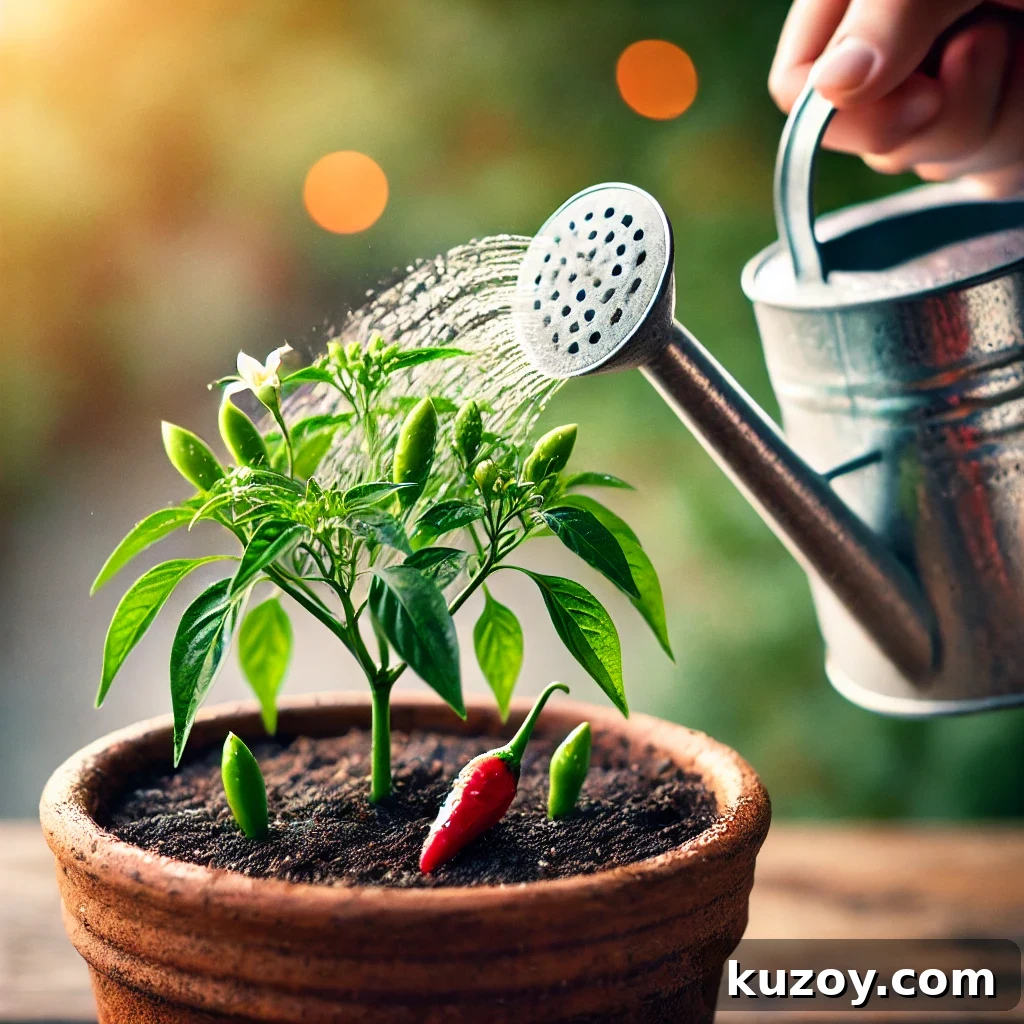
These tips are general guidance. Different chilli varieties and growing conditions will alter watering needs—what works for one variety in a greenhouse may not suit another in a sunny windowsill.
If your plants show problems such as flower drop or yellowing leaves, it’s worth running simple trials to pinpoint the cause.
Take half of the affected plants and try different approaches—water more or less, try bottom watering, adjust feed strength—and observe results. Record what changes you make and their effects. If you discover an effective solution, please share the tip by leaving a comment below.