
Growing up in the Arkansas Ozarks, I rarely looked forward to biscuits. Ours came from a can, and the ones I tried elsewhere were often dry, crumbly, and forgettable.
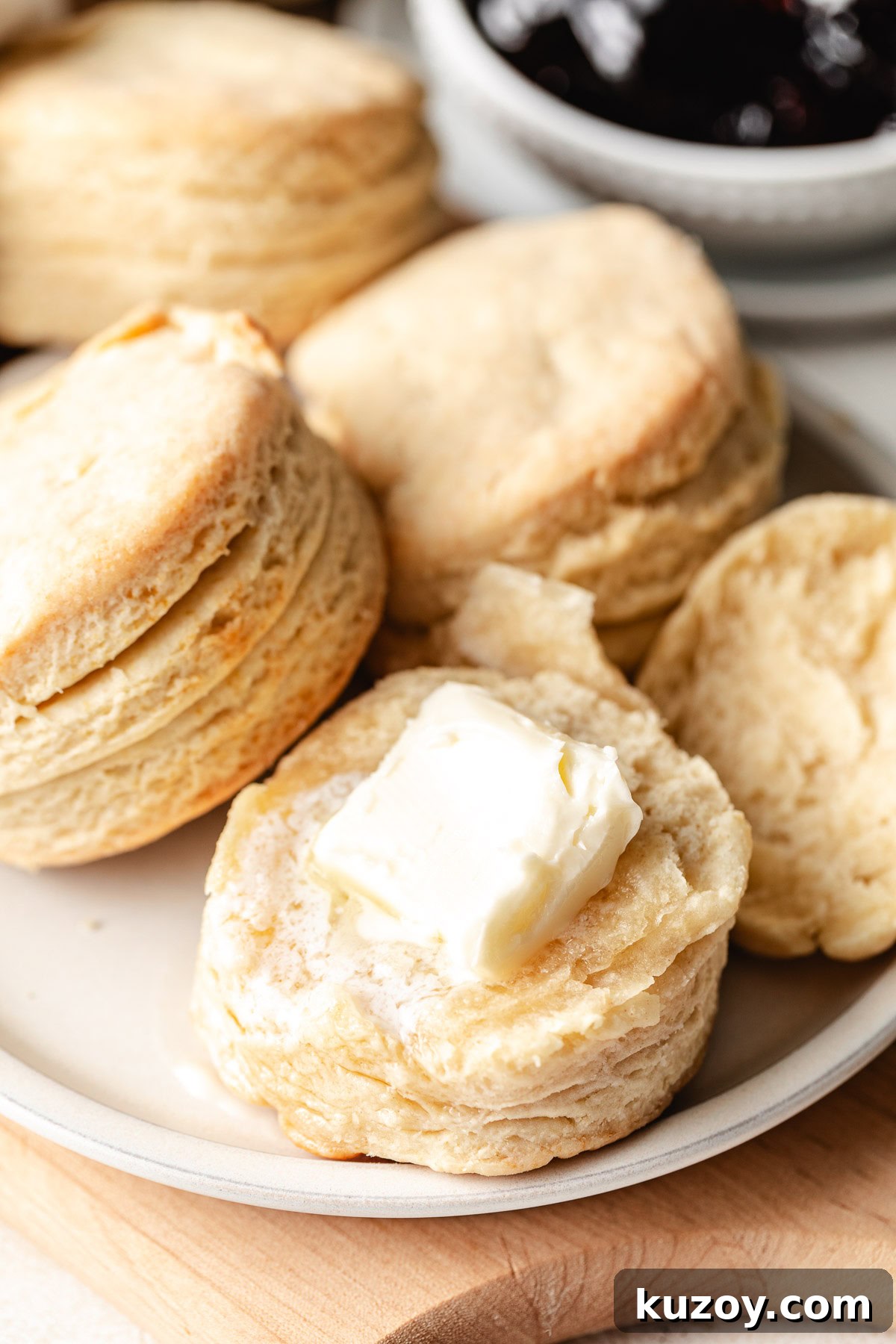
What I eventually discovered was that the problem wasn’t biscuits at all but technique — and not enough salt. Once I learned to keep the butter cold and to handle the dough as little as possible, everything changed. Now I can have a pan of biscuits ready in about 20 minutes, and they disappear fast at my house.
You can make these by hand or with a food processor; I’ll explain both methods. The key is the same either way: keep the butter cold so it creates steam in the oven and produces flaky layers.
How to Make Homemade Buttermilk Biscuits
Follow the photos below to see how the dough comes together. The full recipe instructions are in the recipe card at the bottom.
Preheat the oven to 450°F and lightly grease a baking sheet or cake pan. Cut the butter into cubes and chill it while you gather the other ingredients.
How to Cut In the Butter
Cold butter is the secret to flaky biscuits. As the butter melts in the oven it releases steam that pushes the dough apart and creates layers. If the butter softens before baking, you lose those layers, so keep the butter, buttermilk, and even the mixing bowl cold if your kitchen runs warm.
By hand or with a pastry cutter: Use a large bowl and a pastry cutter, two forks, or your fingertips to work the butter into the flour. Aim for a mixture of fine crumbs and pea-sized butter pieces. Work quickly if using your hands so body heat doesn’t warm the butter.
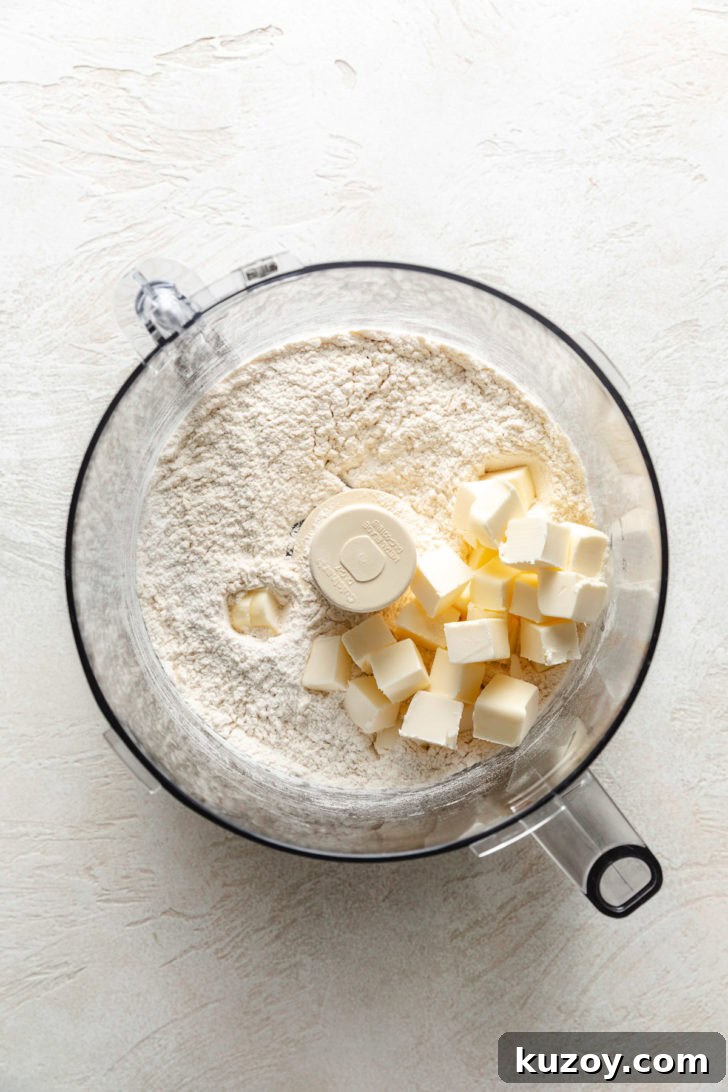
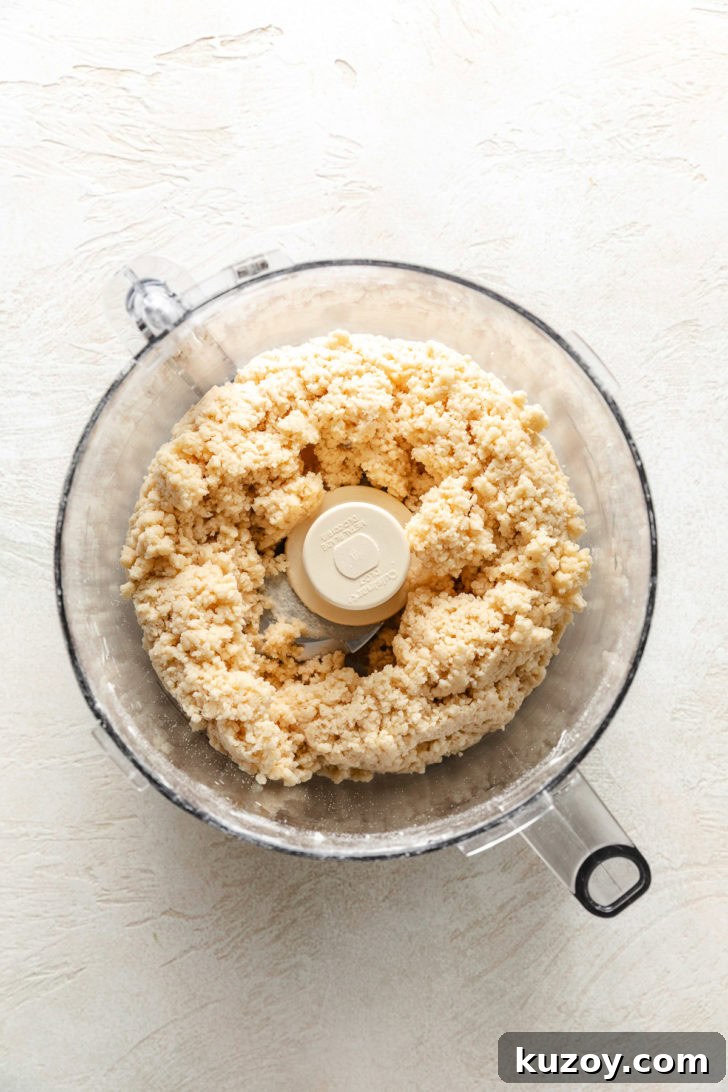
Food processor: Pulse in short bursts until the mix looks like coarse crumbs with some pea-sized pieces. Don’t over-pulse — too much processing warms the butter and risks a dense dough. If the dough feels soft or warm, chill the cut biscuits for 30 minutes before baking so the butter firms up.
Tips for the Best Flaky Buttermilk Biscuits
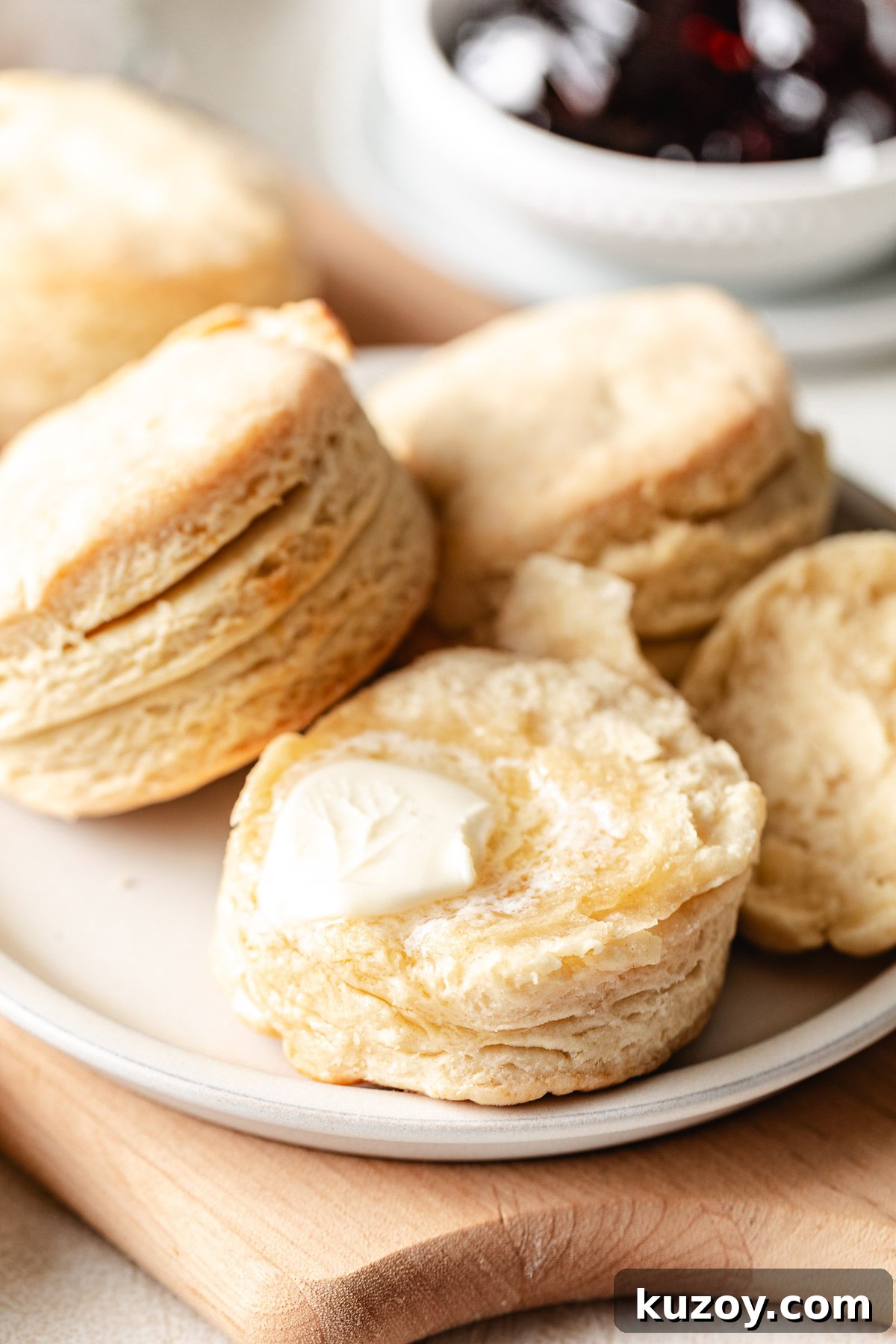
- Keep everything cold. If the dough warms up, chill the cut biscuits for 30 minutes before baking.
- Don’t overwork the dough. Excess handling or rolling makes biscuits dense.
- Cut without twisting. Press straight down with the cutter to avoid sealing the edges, which prevents a tall rise.
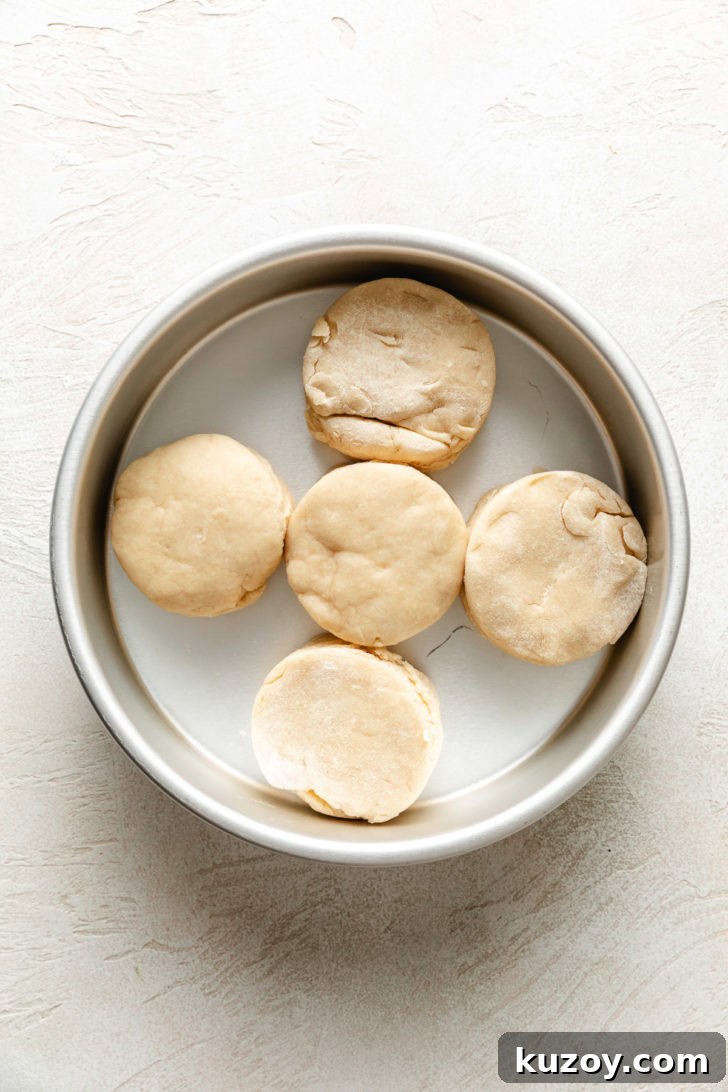
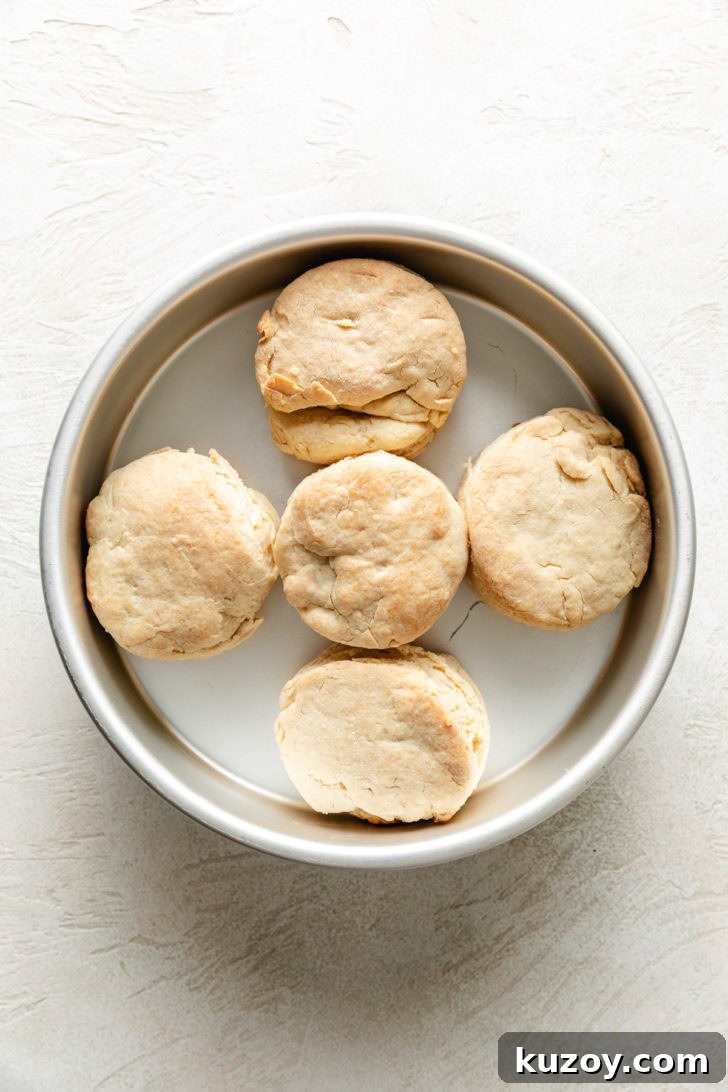
- Place biscuits close together. When sides touch during baking, biscuits support each other and rise higher.
Learn from Mistakes
I’ve made every biscuit mistake at least once. The biggest culprit is overworking the dough — once it holds together, stop. Too much liquid yields sticky, gummy dough; the correct texture holds together when pressed but isn’t clingy. If the cutter is twisted, the edges crimp and the biscuits won’t rise properly. Measure baking powder carefully — too much gives a metallic off-taste.
Substitutions
Buttermilk: If you don’t have buttermilk, whole milk or 2% works. You can make a quick sour milk by adding 1 tablespoon lemon juice or white vinegar to 1 cup milk and letting it sit 5–10 minutes.
Self-rising flour: Use self-rising flour as a shortcut by omitting the baking powder and salt. Substitute the same amount (2 cups) of self-rising flour for the all-purpose flour called for.
Frequently Asked Questions
Do I need a biscuit cutter?
No. A drinking glass, ramekin, or round cookie cutter works fine. You can also press dough into an 8-inch pan and cut squares with a knife to avoid scraps and re-rolling.
Why aren’t my biscuits rising?
Common causes are warm butter, overworked dough, expired baking powder, or placing biscuits too far apart on the pan. If the dough feels soft in a warm kitchen, refrigerate the cut biscuits for 30 minutes before baking to firm the butter.
Can I make biscuits without buttermilk?
Yes. Use whole or 2% milk, or make a quick buttermilk substitute by adding 1 tablespoon lemon juice or vinegar to 1 cup milk and letting it rest 5–10 minutes.
Can I freeze the dough before baking?
Yes. Freeze cut biscuits on a sheet pan until solid, then store in a bag. Bake from frozen, adding 2–3 minutes to the baking time.
What does the dough feel like when it’s right?
It should hold together when pressed but not be sticky. You should be able to fold it onto itself and pick it up without it clinging to your hands. Lightly dust the counter with flour only if necessary.
How to Store Leftovers
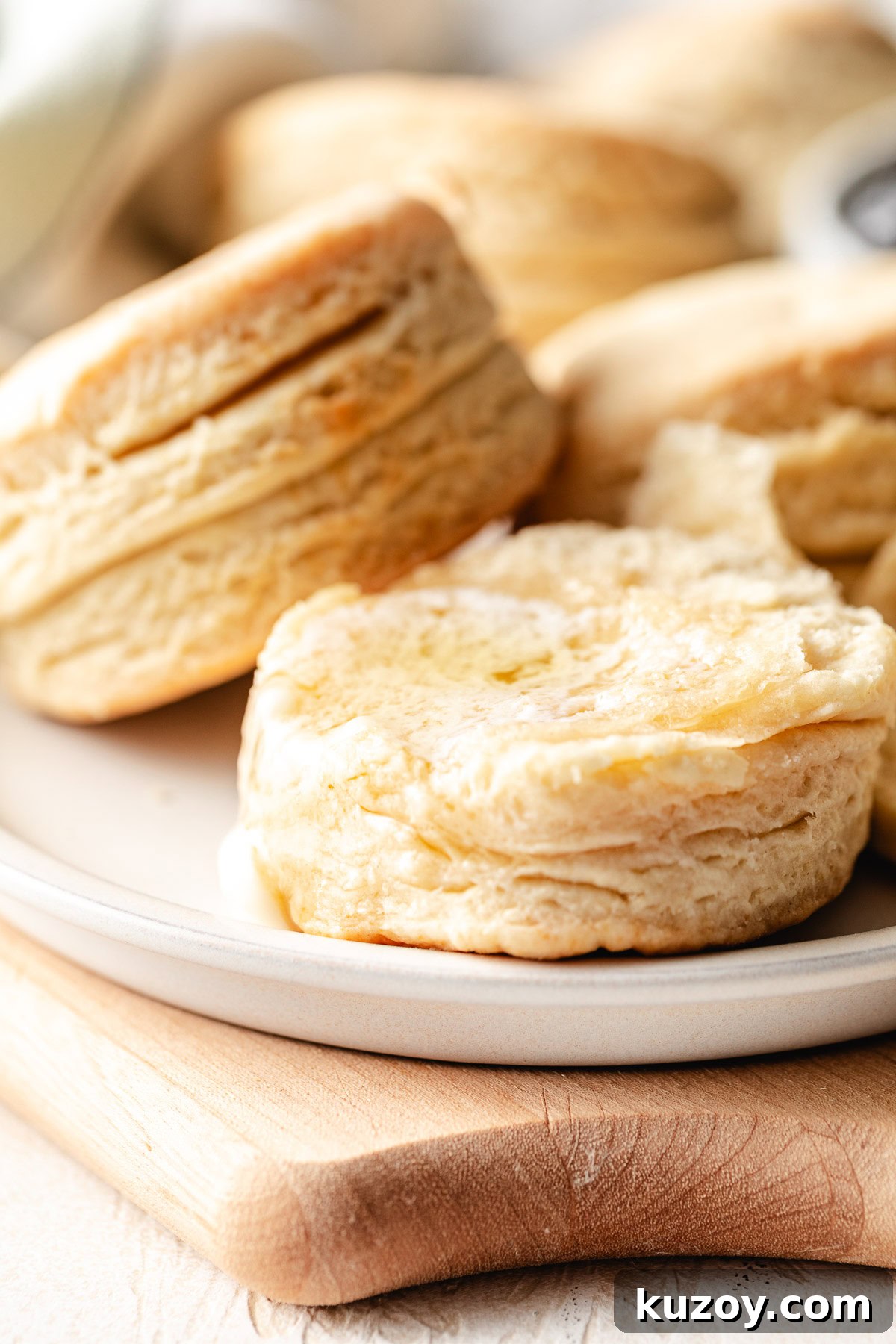
Biscuits are best the day they’re baked. Store at room temperature in an airtight container for up to 2 days or in the fridge for up to 4 days. For longer storage, freeze baked biscuits in a single layer, then transfer to a bag; reheat at 350°F for 8–10 minutes.
You can also freeze unbaked biscuits: cut them out, freeze on a sheet pan, then store in a bag. Bake from frozen, adding 2–3 minutes to the baking time.
Ways to Serve Homemade Biscuits
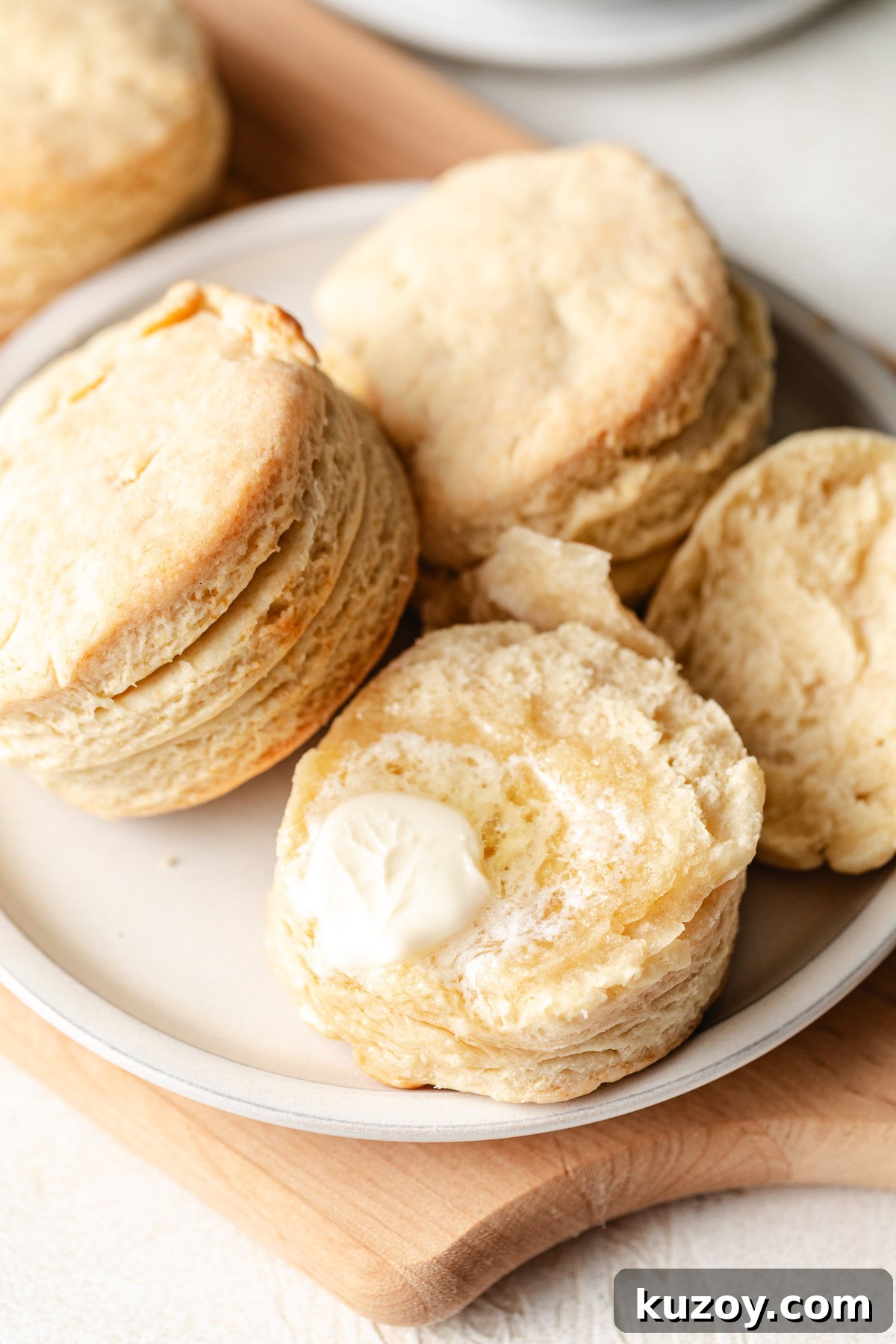
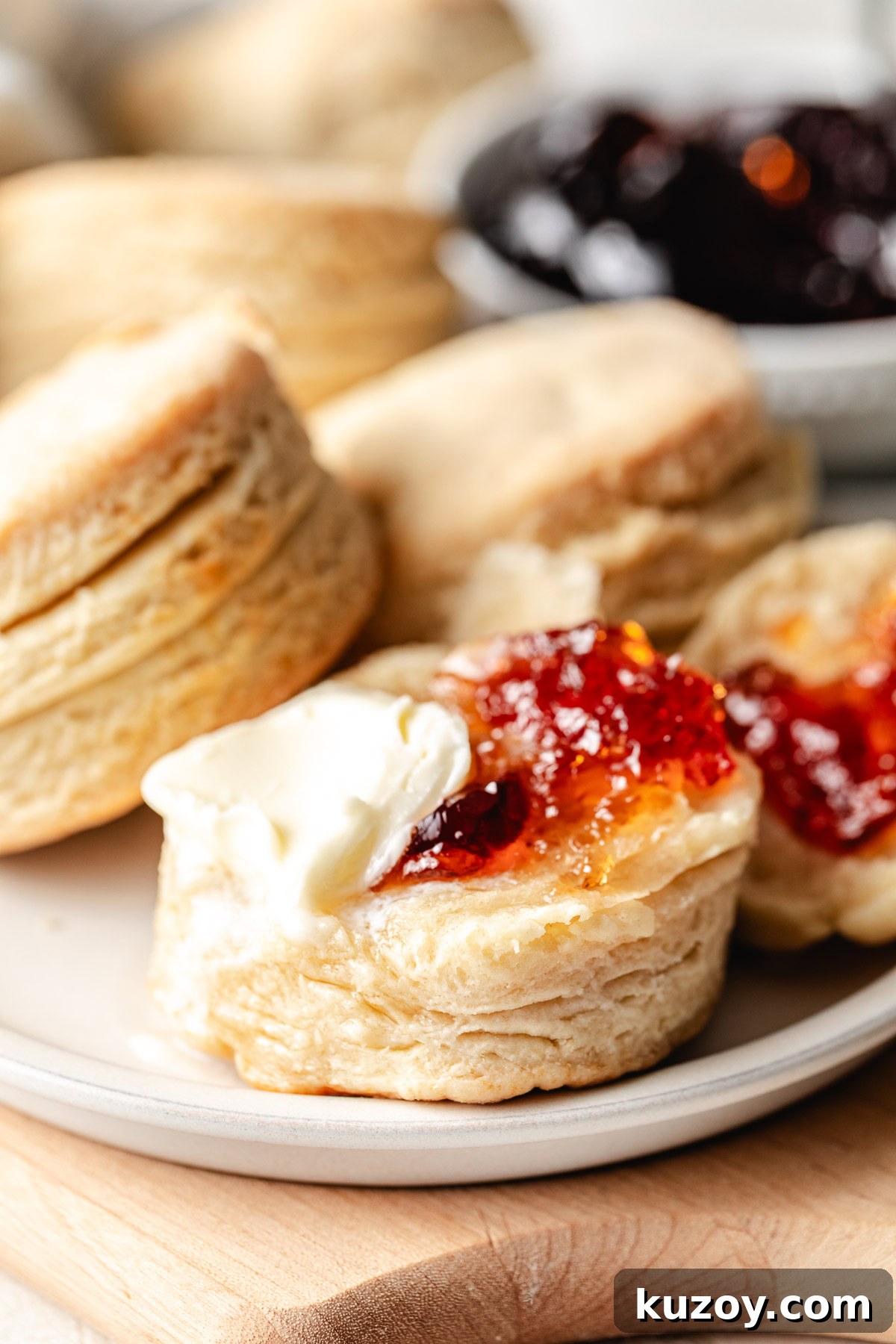
These biscuits are versatile. Serve with sausage gravy for a hearty breakfast sandwich or split and layer with ham, bacon, egg, and cheese. For a sweeter approach, top them with butter and honey, fruit curd, or jam. They’re also excellent alongside soups and stews for dinner.
More Baking Recipes
- Buttermilk Pancakes
- Cinnamon Rolls
- Brioche Rolls
- English Muffin Bread

Flaky Homemade Buttermilk Biscuits
Ingredients
- 8 tablespoons unsalted butter, very cold and cubed
- 2 cups all-purpose flour
- 1 tablespoon baking powder
- ½ teaspoon salt
- ¼ to ½ cup cold buttermilk, as needed
Instructions
-
Cut the butter into cubes and place it in the freezer while you gather the rest of the ingredients.
-
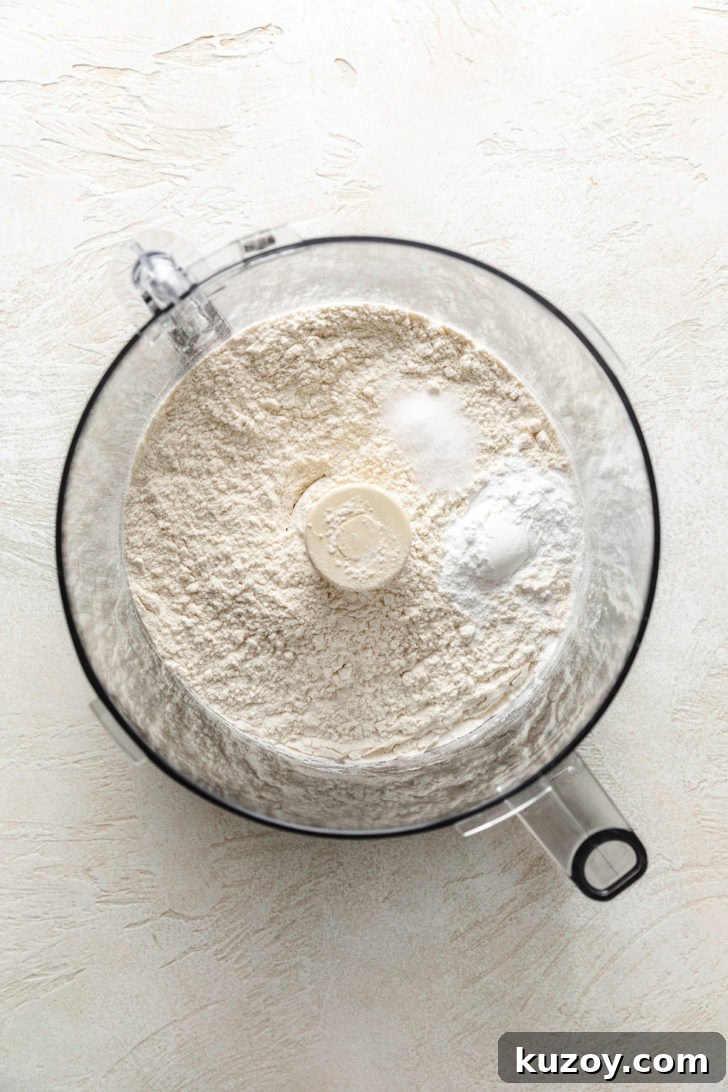
Add the flour, baking powder, and salt to a food processor. Pulse a few times to combine.
-
Add the cold butter and pulse until the mixture looks like coarse crumbs with some pea-sized pieces.
-
With the food processor running, slowly pour in the buttermilk. Stop as soon as the dough is damp and holds together when pressed. It should not be sticky or wet.
-
Turn the dough out onto a lightly floured surface. Pat into a rectangle, fold in half, and repeat 4 to 5 times.
-
Pat the dough to ½–1 inch thickness. Dip a biscuit cutter in flour and press straight down without twisting. Stack scraps, pat out, and cut again.
-
Place the biscuits on a lightly greased baking sheet or cake pan so the sides are just touching.
-
Bake at 450°F for 10 to 14 minutes until fluffy and golden brown.
-
Brush the tops with melted butter and serve warm.
Notes
- The calories listed are an approximation based on the recipe ingredients and a serving size of one biscuit; actual values may vary.
- Start with less buttermilk and add more only if needed.
- This recipe makes about 5–7 biscuits depending on thickness.
- To mix by hand, use a large bowl and a pastry cutter, two forks, or your fingertips to work the butter into the flour until coarse crumbs form, then add buttermilk and stir just until the dough comes together.
- If the dough feels warm before baking, refrigerate the cut biscuits for 30 minutes.
- Store leftovers in an airtight container at room temperature for up to 2 days or in the fridge for up to 4 days.