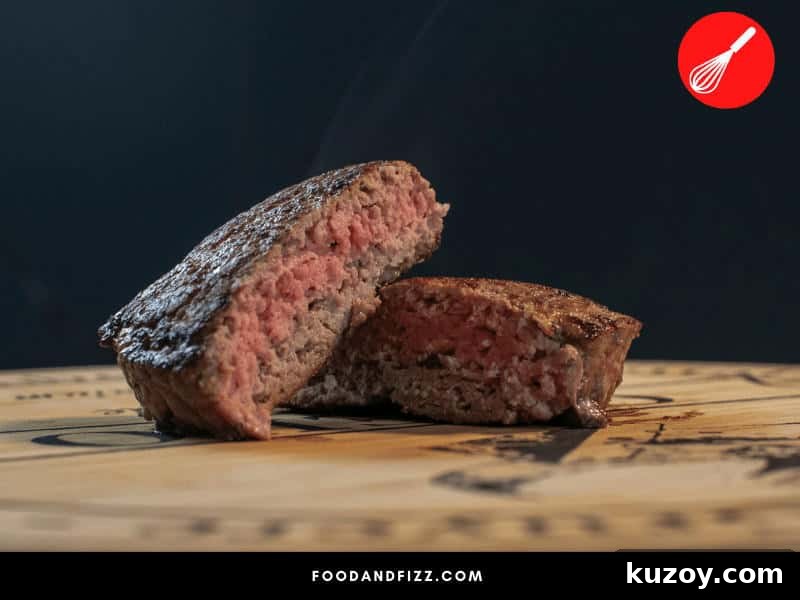
If you’ve ever cooked a burger and noticed pink in the center, you may have worried it wasn’t safe. In many cases, pink in the middle is normal and safe—provided the burger reaches the right internal temperature.
This article explains what causes pink coloring in burgers, the recommended doneness temperatures, and when a pink center is acceptable. Read on to learn how to judge doneness safely and keep great flavor.
Table of Contents
Burger Pink in Middle – Is it Safe to Eat?
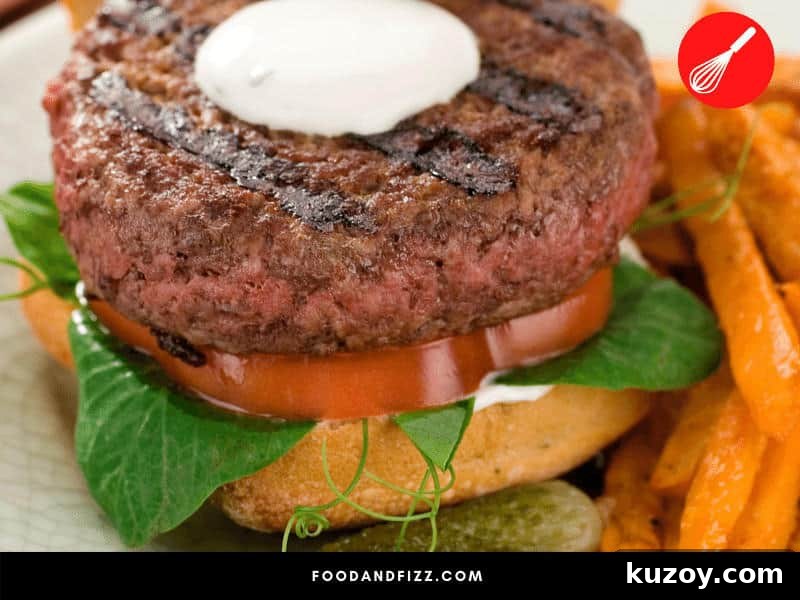
A burger with a pink center can be safe to eat if its internal temperature reaches 160°F (71°C). Many restaurants that serve higher‑quality beef will ask how much pink you prefer because properly cooked burgers can still show some pink without being unsafe.
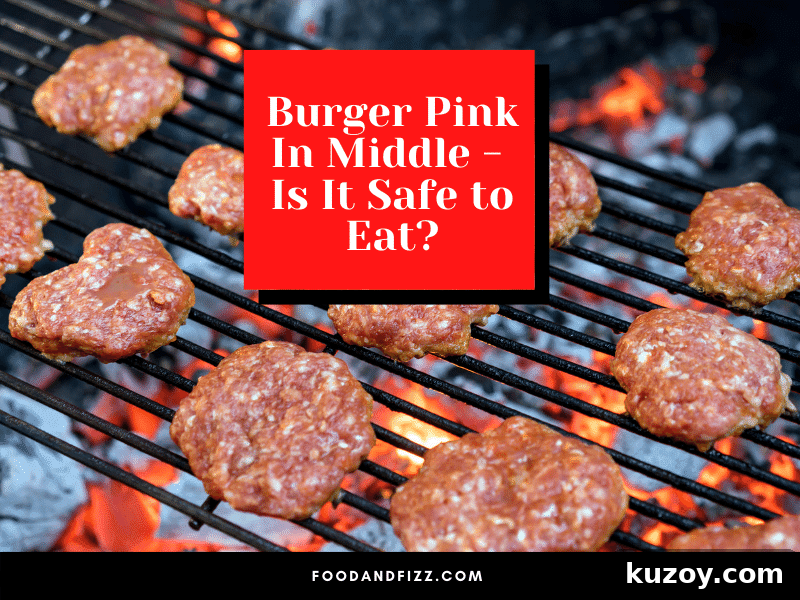
What Is the Pink In the Middle of a Burger?
Raw patties look red or pink because of myoglobin, a protein in muscle that stores oxygen. Myoglobin gives meat its red hue when exposed to oxygen.
As the burger cooks, heat alters myoglobin and other proteins, which causes the meat to change from pink or red to brown. The exterior cooks faster than the center, so a cut burger can show a browned outside with a pinker interior.
You can cook a burger until it’s completely brown through the center, but overcooking can reduce flavor and juiciness, especially with high‑quality cuts.
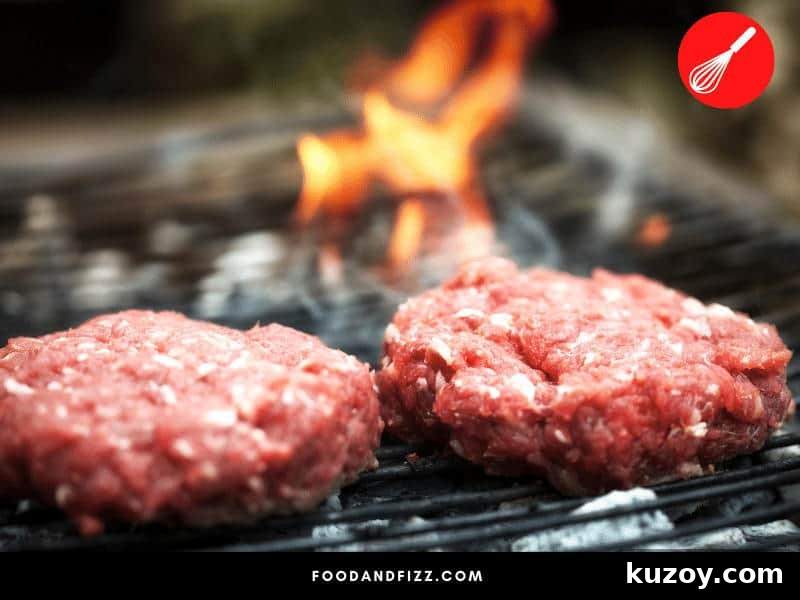
The Different Doneness Temperatures of Burgers
When ordering a burger, restaurateurs ask for doneness because color, texture, and internal temperature vary. Here are common doneness levels and what to expect from each.
Rare
Rare burgers are the pinkest and often feel very soft; they may retain some red juices in the center. This produces a very juicy, tender bite favored by people who enjoy a pronounced beef flavor. Note that rare burgers may not reach the recommended safety temperature for ground beef unless specifically cooked to 160°F.
Medium Rare
Medium rare burgers show less pink but still have a noticeable rosy center. They are firmer than rare but still juicy, with much of the blood cooked away while some myoglobin remains pink.
Medium
Medium burgers have most pink cooked out, often showing a thin line of pink in the center. They are firmer with fewer juices than rarer preparations and a more cooked‑through flavor.
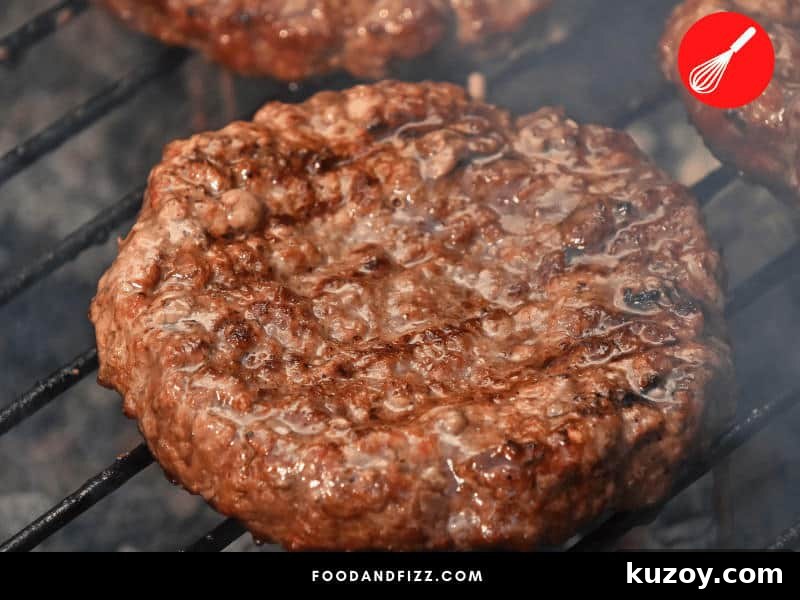
Medium Well
Medium well burgers show little to no pink. Internal temperatures typically range from 155–165°F (68–74°C). They are firm with minimal juices. People uncomfortable with any pink often prefer this level, though higher cooking can dry the meat if not handled carefully.
Well Done
Well‑done burgers are brown or gray throughout with no pink and usually exceed 165°F (74°C). They are the driest option and can be less flavorful due to lost juices.
Does Lower Quality Beef Still Have Pink In the Middle?
Higher‑quality beef tends to retain more pink color when cooked to certain doneness levels because it contains more myoglobin and better marbling. Lower‑quality beef may appear gray rather than pink even at lower temperatures due to less myoglobin and different processing.
If a low‑quality burger appears pink, it’s not a reliable sign of safety—always confirm doneness with a food thermometer rather than color alone. Undercooked ground beef can carry pathogens that cause foodborne illness.
Eating a Burger With Pink in the Middle
A burger with a pink center is safe when it has been cooked to the recommended internal temperature for ground beef: 160°F (71°C). The most reliable way to check this is with a digital food thermometer inserted into the center of the patty.
If you prefer a particular texture or color, learn the target temperatures for each doneness level and monitor the burger with a thermometer to balance safety and flavor.
Frequently Asked Questions
How Pink is Too Pink for a Burger?
If the center of a burger is still mushy like raw ground beef from the package, it’s too undercooked. The center should have some give but be reasonably firm; texture combined with a thermometer reading is the best guide.
What Happens When You Eat a Burger that Isn’t Fully Cooked?
Eating undercooked ground beef risks foodborne illness because bacteria present on meat surfaces can be mixed into the interior during grinding. Symptoms of food poisoning include stomach cramps, vomiting, and diarrhea, and in rare cases complications can be severe.